What to Do in Bath in One Day
Bath is small enough that one focused day covers the Roman Baths, the Abbey, the Georgian showpieces and a proper lunch, as long as you walk it in the right order.
 Written with James Thornton, London to Bath day tour guide & heritage specialist
Short answer
Start at the Roman Baths first thing (allow 1.5 to 2 hours), then step next door to Bath Abbey. Walk uphill to The Circus and the Royal Crescent, come back down for lunch or afternoon tea, and finish at Pulteney Bridge and the weir. If time and energy allow, add Thermae Bath Spa or Prior Park in the late afternoon. Everything sits within a compact, walkable centre, so no transport is needed once you arrive.
Bath rewards a plan. The city is compact, but the sights are just far enough apart, and the streets just hilly enough, that walking them in the wrong order wastes time and legs. Do it in this sequence and one day covers everything a first visit should, without a single rushed stop. If you would rather not walk the whole itinerary, a hop-on-hop-off bus covers the same sights on wheels, an easy add-on to the featured London day tour, and you can check prices and times here.
This assumes you arrive by mid-morning. Coming from London, the direct train from Paddington takes about 1 hour 20 minutes and Bath Spa station is a five-minute walk from the first stop, so an early departure sets you up perfectly. If you would rather not plan the trains at all, a guided day tour from London to Bath drops you into the centre ready to begin.
Why start with the Roman Baths first?
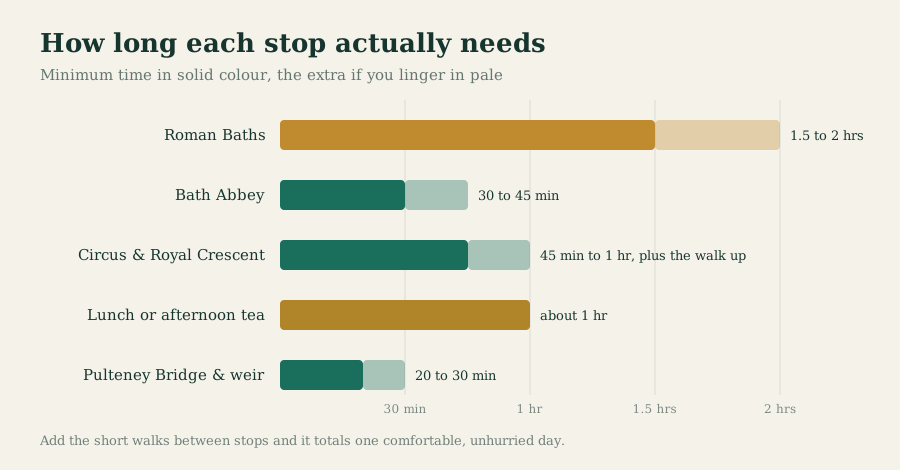
Because the queue does. The Roman Baths pull more than a million visitors a year, and the terraces fill by late morning in summer, so a timed ticket at opening buys you the Great Bath at its quietest. Allow 1.5 to 2 hours before the day tightens up.
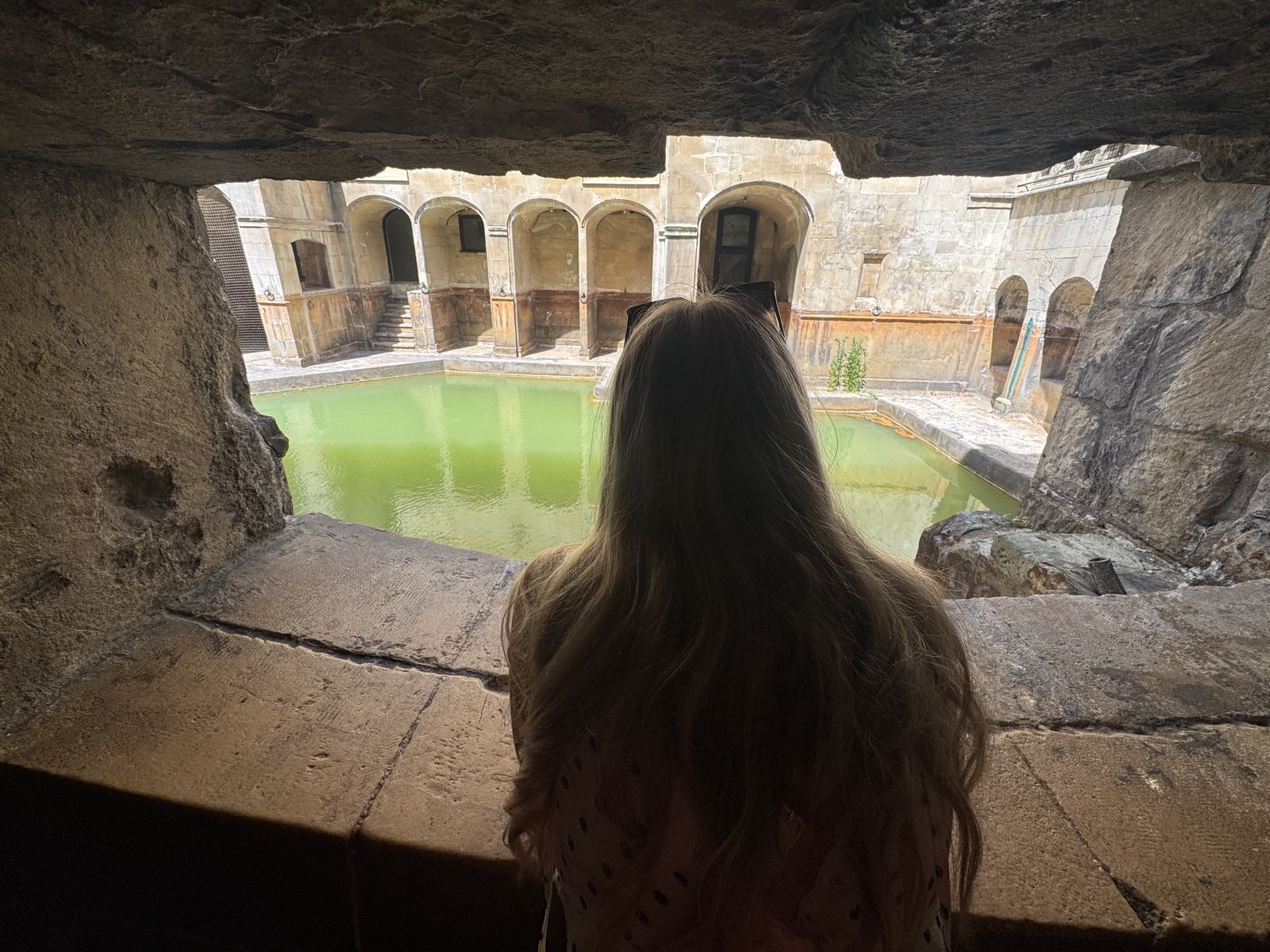
You are standing over Britain's only naturally hot spring, where water still surfaces at around 46°C. The Romans built a bathing complex and a temple to Sulis Minerva around it nearly 2,000 years ago. Below the open-air Great Bath, the museum holds the gilded bronze head of the goddess and the carved Temple pediment with its glaring Gorgon's head. The included audio guide is genuinely good, with one track voiced by Bill Bryson. Book ahead in summer. Reserve a timed Roman Baths entry ticket in advance, or check the official Roman Baths website for the current price.
One thing to know: you look at the water, you do not bathe in it. The green colour is just algae growing in water open to the sunlight. Actual bathing happens later, and elsewhere.
What comes after the Roman Baths?
Bath Abbey, and it stands directly next door, so the second stop costs no walking at all. Begun in 1499, it was the last great medieval church of England, with a fan-vaulted ceiling, ticketed sightseeing entry, and a tower tour that climbs 212 steps for a view over the whole city.
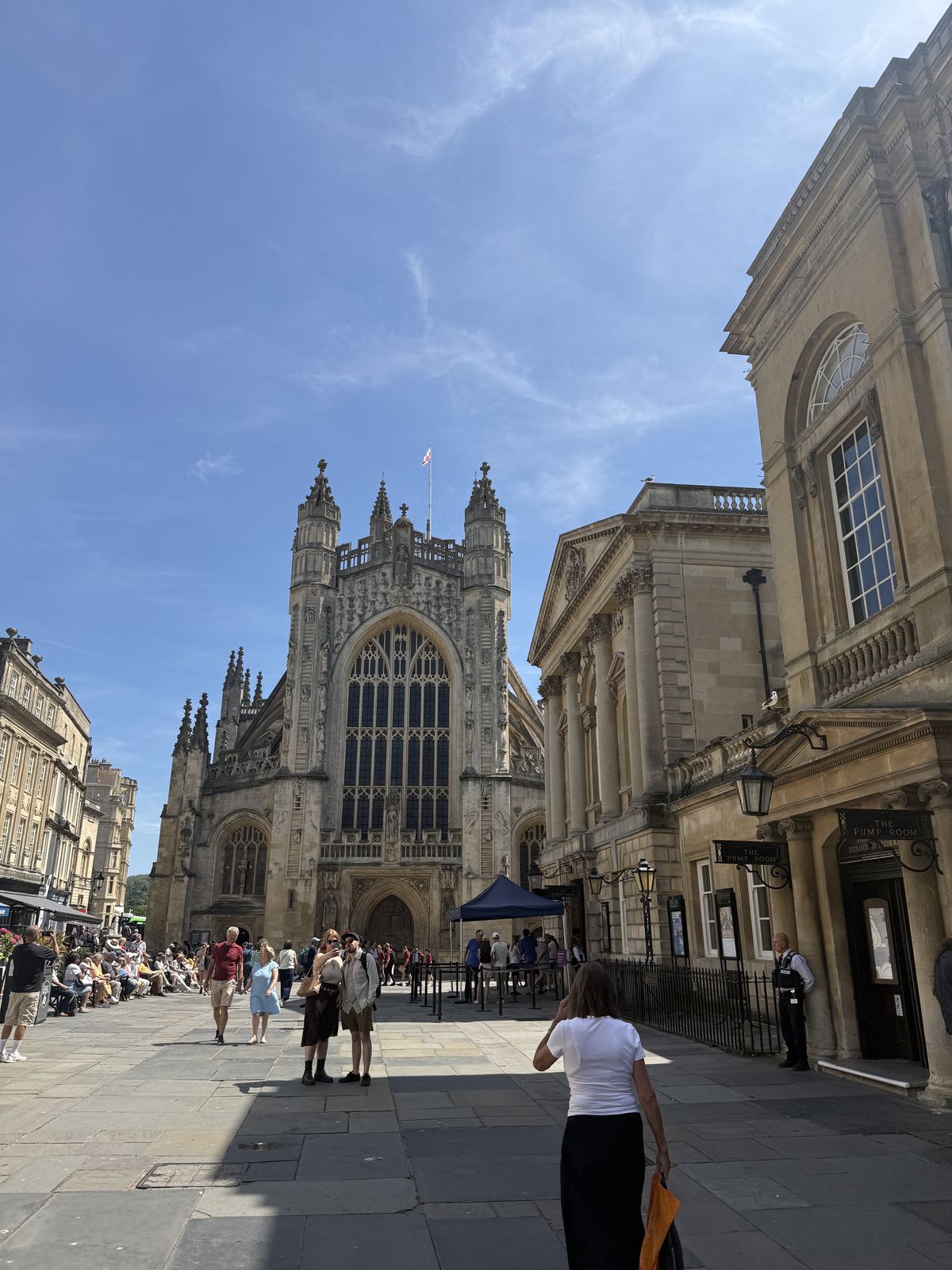
Step out of the Roman Baths and Bath Abbey is right there. The soaring fan-vaulted ceiling and the west front carved with climbing angels reward even a quick look inside, but sightseeing inside requires an admission ticket. If you have energy and a head for heights, the paid tower tour is the best city viewpoint there is. Allow 30 to 45 minutes.
When should you walk up to The Circus and the Royal Crescent?
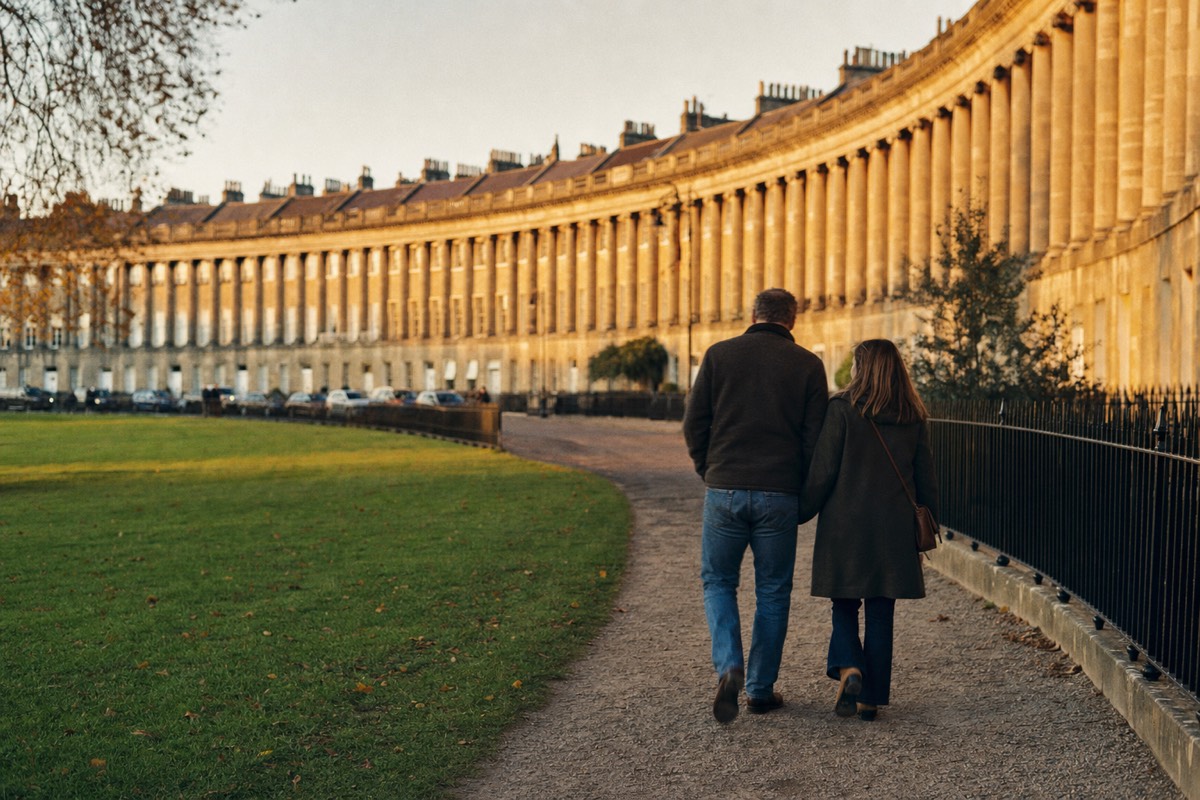
Late morning, while your legs are still fresh. The climb from the centre through Gay Street is the steepest walking of the day, and it delivers Bath's two Georgian showpieces back to back: The Circus, begun in 1754, and the thirty-house sweep of the Royal Crescent, built 1767 to 1774.
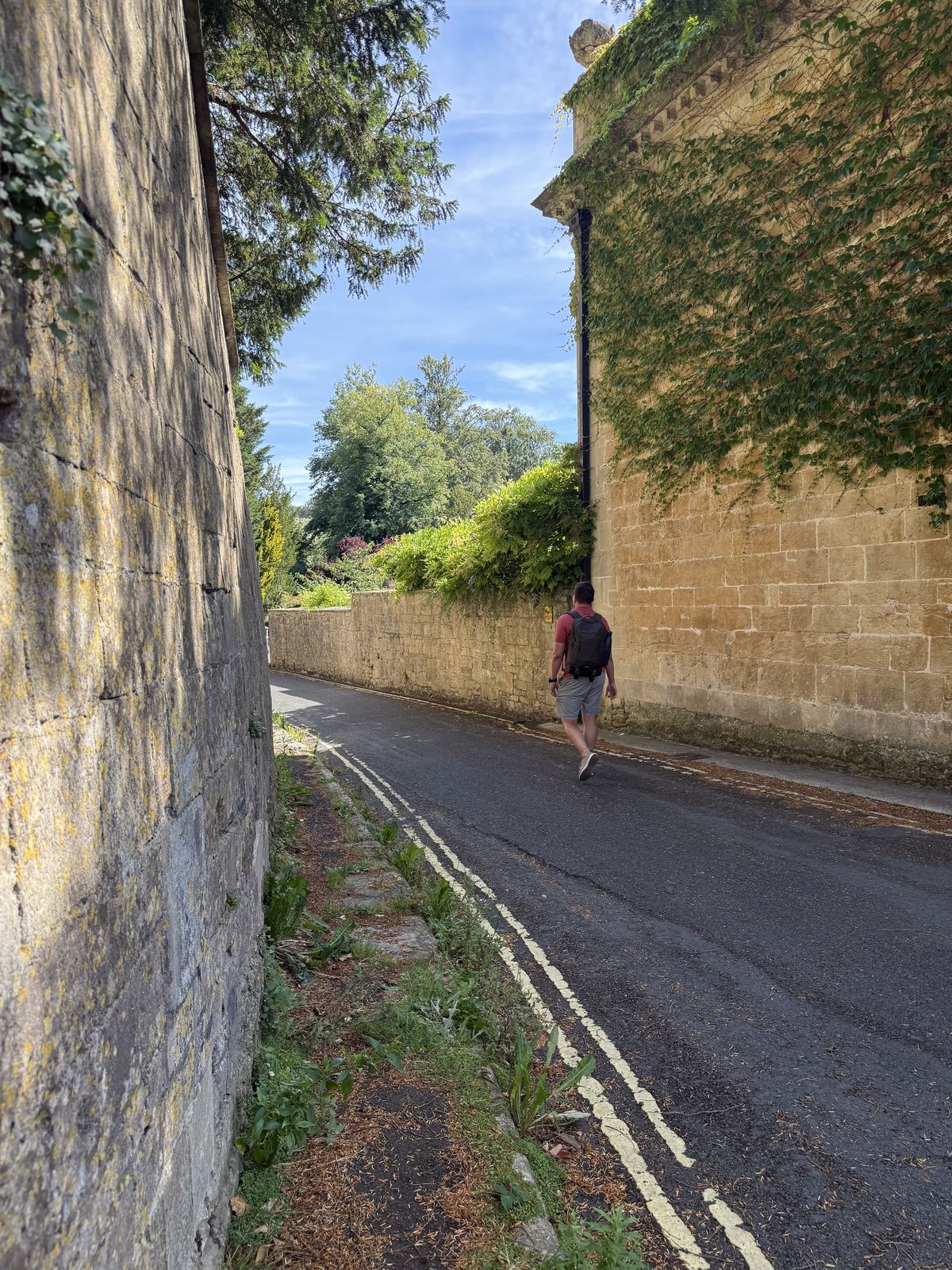
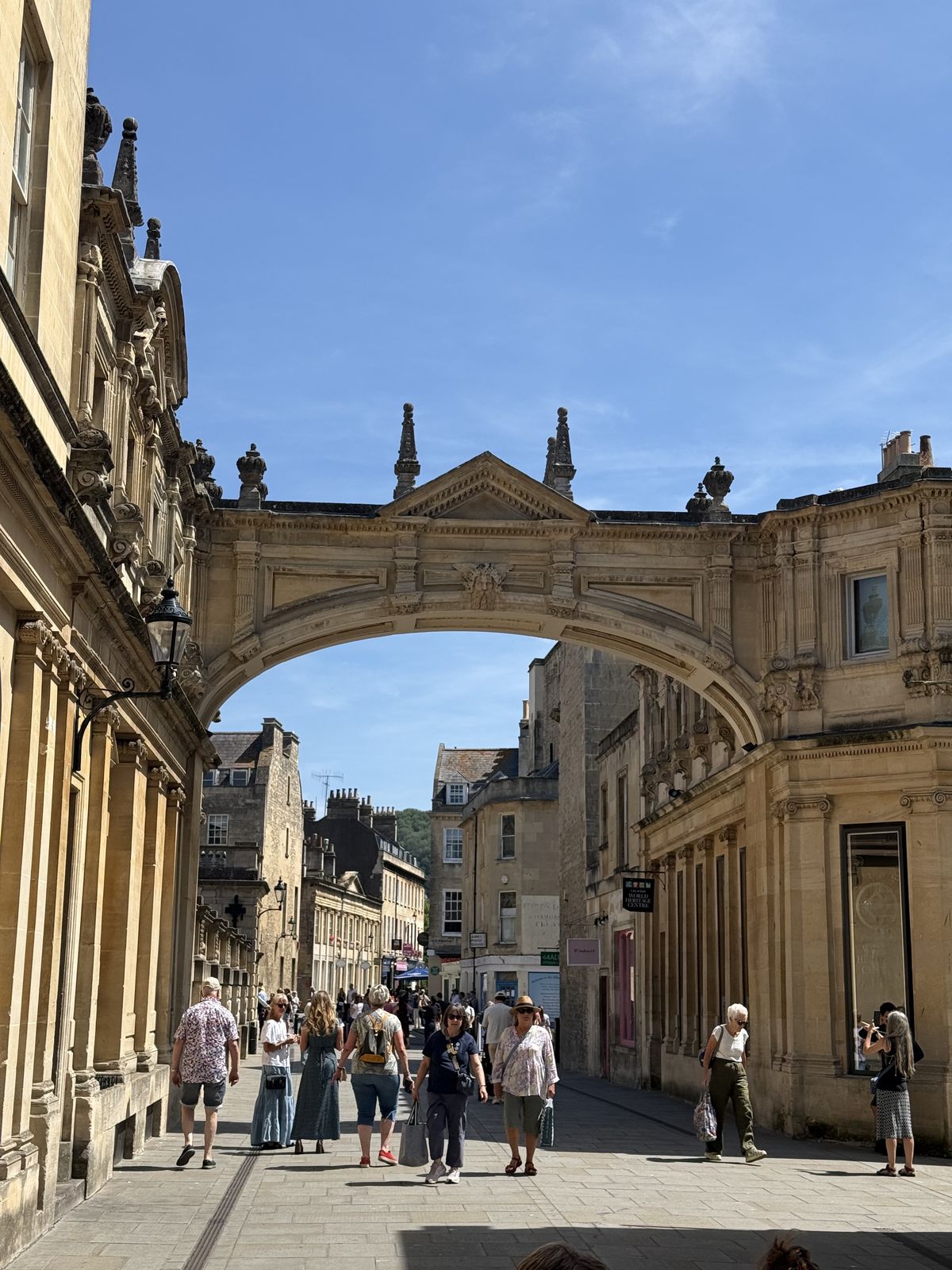
Now walk uphill, through Milsom Street and Gay Street, toward the Georgian showpieces. This is the gentle climb people mean when they call Bath hilly, and it is worth every step.
The Circus comes first, a ring of townhouses in three curved segments built by John Wood the Elder between 1754 and 1768. A short walk on brings you to the Royal Crescent, thirty terraced houses in one sweeping curve, designed by John Wood the Younger and built between 1767 and 1774. It is the single most photographed piece of architecture in Bath, and the great lawn in front is a fine spot to sit for a few minutes. No. 1 Royal Crescent is a period museum if you want to step inside a Georgian townhouse. Allow 45 minutes to an hour for the pair, plus the walk.
| Leg | On foot |
|---|---|
| Bath Spa station to the Roman Baths | About 5 minutes |
| Roman Baths to Bath Abbey | Next door |
| Centre to The Circus and Royal Crescent | 15 to 20 minutes, uphill |
| Centre to Pulteney Bridge | A couple of minutes |
Where should you stop for lunch or afternoon tea?
Back down in the centre, at one of two spots with real history: Sally Lunn's, serving its namesake bun in a house dated to around 1482, one of the oldest in Bath, or the Pump Room above the Roman Baths, where you can take tea and taste the spa water.
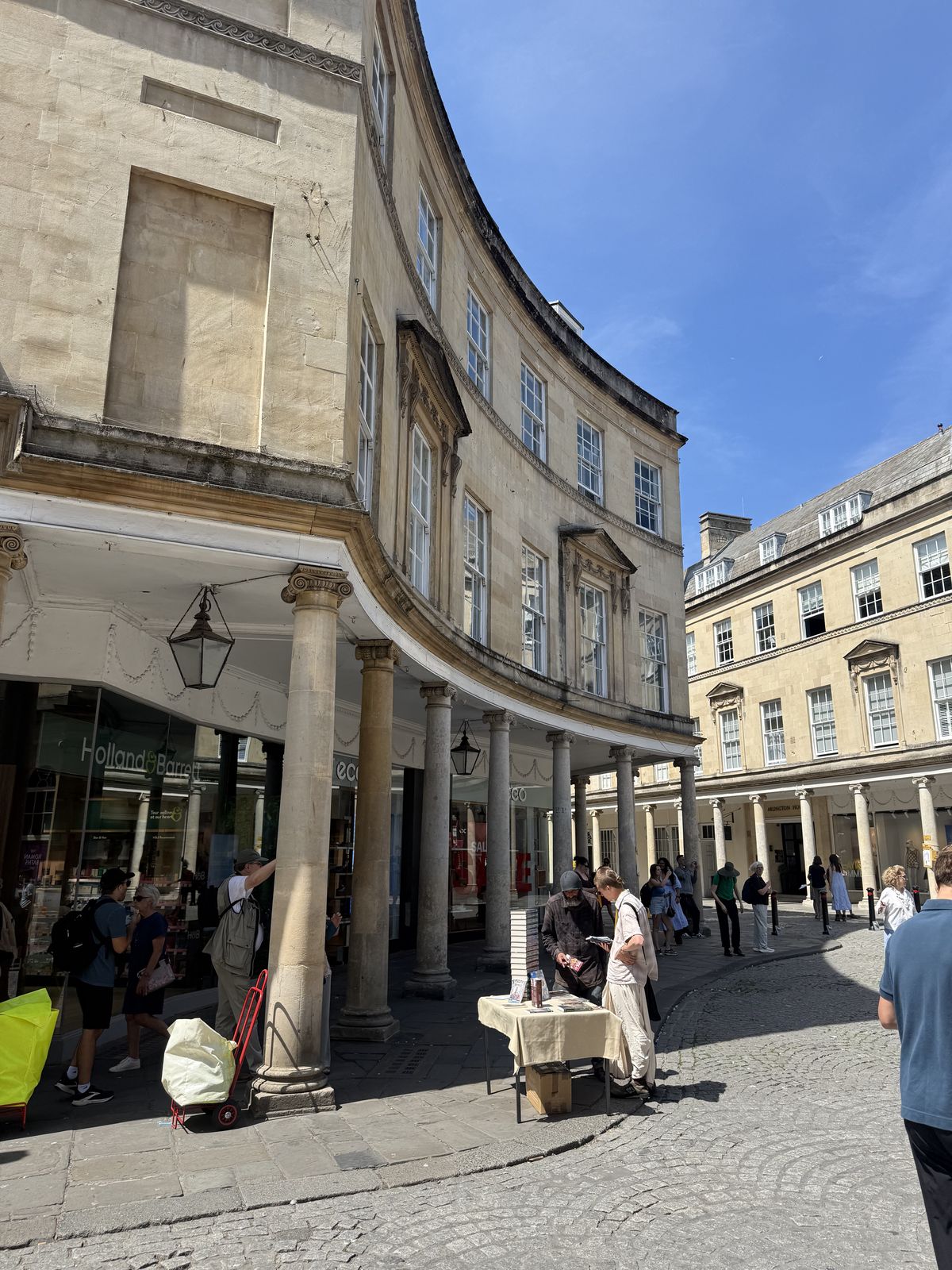
Head back downhill toward the centre for a proper break. Bath has a strong independent food scene and a serious afternoon-tea tradition. Two options with history behind them: Sally Lunn's, a historic eating house known for the large, light Sally Lunn bun, and The Pump Room above the Roman Baths, an elegant room for tea where you can also taste the spa water. Give yourself an hour. For more choices, where to eat in Bath rounds up the options.
How do you finish the afternoon at Pulteney Bridge?
Walk down to the river for the classic closing shot: Pulteney Bridge, built between 1769 and 1774 and one of only four bridges in the world with shops lining both sides of its span, above the curved horseshoe cascade of the weir. The best angle is from Parade Gardens below.
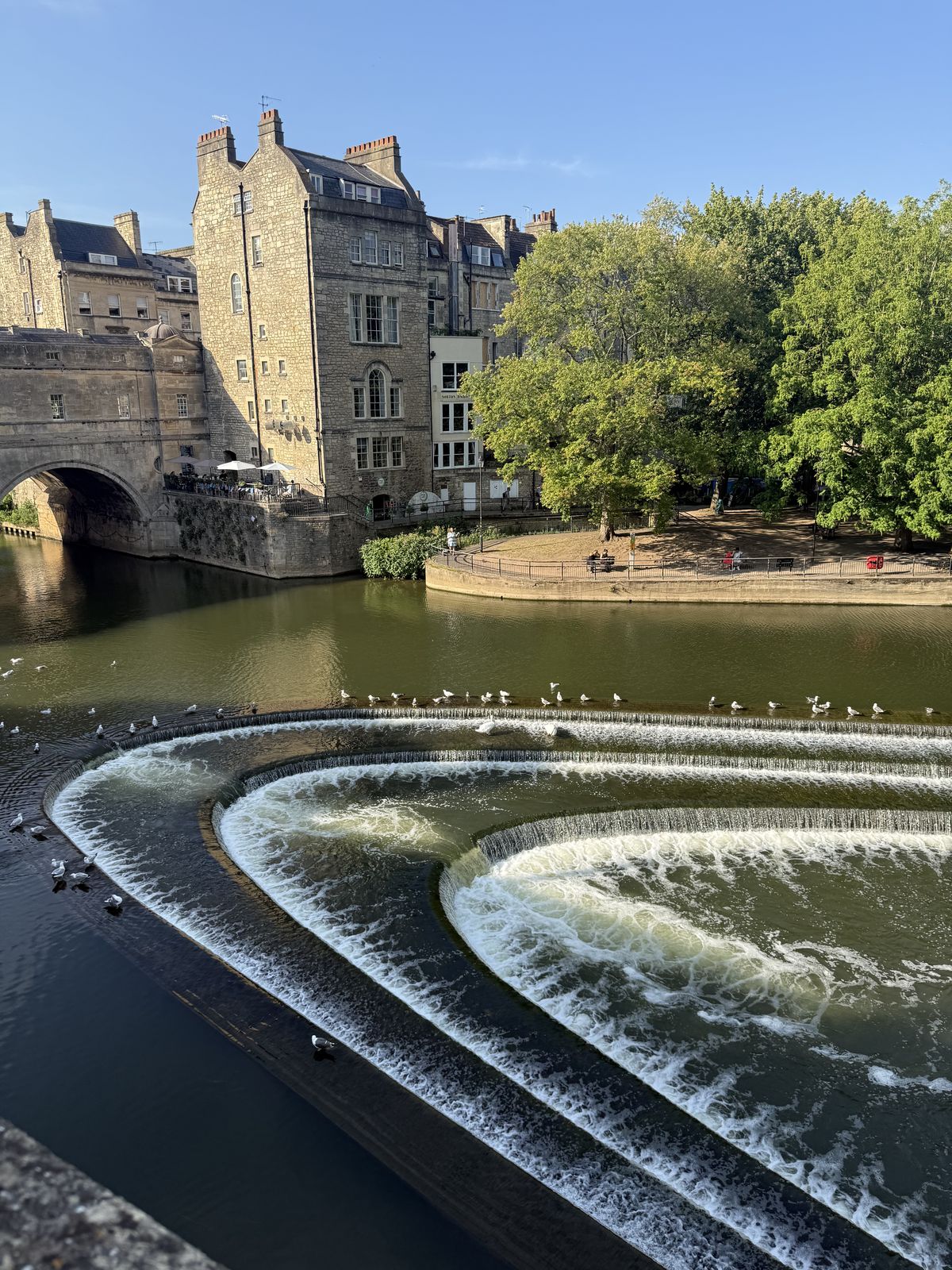
The bridge was designed by Robert Adam, and the photograph everyone wants is of it above Pulteney Weir, the curved cascade on the River Avon. The best angle is from the south bank or Parade Gardens just below. Allow 20 to 30 minutes to walk it, cross it, and get the shot.
What can you add if time and legs allow?
Pick one of two: an actual bathe at Thermae Bath Spa, where pools of mineral-rich thermal water sit at a warm 33.5 to 34C under a rooftop view, or Prior Park Landscape Garden, whose Palladian Bridge is one of only four of its design anywhere in the world.
If you still have a couple of hours, pick one:
- Thermae Bath Spa. This is where you actually bathe in Bath's thermal water, in a modern day spa with a famous open-air rooftop pool looking over the city. It is a separate building and ticket from the Roman Baths, and you should book ahead. A relaxing way to end the day, though it eats a good chunk of it. See is Thermae Bath Spa worth it.
- Prior Park Landscape Garden. An 18th-century National Trust garden shaped with Alexander Pope and Capability Brown, with its rare Palladian Bridge crossing the lake and views back over Bath. There is no visitor parking, so arrive on foot or by bus from the centre.
What does the full one-day timeline look like?
Roman Baths at opening, Abbey late morning, the uphill Georgian walk around midday, lunch or tea early afternoon, Pulteney Bridge mid-afternoon, and an optional spa or garden to finish. That order keeps the climbing early, the booking pressure on one ticket, and the day unhurried from start to end.
| Time | Stop |
|---|---|
| Opening to late morning | Roman Baths (book a timed ticket) |
| Late morning | Bath Abbey (next door, ticketed sightseeing entry) |
| Around midday | Uphill to The Circus and Royal Crescent |
| Early afternoon | Lunch or afternoon tea in the centre |
| Mid-afternoon | Pulteney Bridge and the weir |
| Late afternoon | Optional: Thermae Bath Spa or Prior Park |
| Stop | Entry | Book ahead? |
|---|---|---|
| Roman Baths | Timed ticket | Yes, especially in summer |
| Bath Abbey | Ticketed admission | Online or on arrival; check visiting hours |
| Abbey tower tour | Paid ticket, 212 steps | Check tour times on the day |
| Thermae Bath Spa | Separate spa ticket | Yes, book ahead |
| Prior Park | National Trust | No parking, arrive on foot or by bus |
That is a full, unhurried day. If you are wondering whether one day is really enough, how many days in Bath weighs it against a longer stay, and is a day trip to Bath from London worth it makes the wider case for the trip.
What does a realistic hour-by-hour day in Bath look like?
Arrive at Bath Spa by around 9:45, be at the Roman Baths for opening, and one unhurried day still leaves you on a late-afternoon train home. The clock below assumes a 10am start and a train back between 5 and 6pm, with slack built in for coffee, photos and a sit-down lunch.
The point of a schedule like this is not to march you around. It is to put the one stop that needs booking, and the one climb that needs fresh legs, in the right place so the rest of the day can drift. Treat the times as a spine, not a stopwatch. If the Roman Baths hold you for the full two hours, you simply trim the optional spa or garden at the end rather than rushing the middle. If you move quickly, you gain an hour to sit on the Royal Crescent lawn or linger over tea.
| Time | Where you are | Why then |
|---|---|---|
| 09:45 | Off the train, walking into the centre | Beat the coach groups to the Baths |
| 10:00 to 12:00 | Roman Baths on a timed ticket | Quietest terraces of the day |
| 12:00 to 12:40 | Bath Abbey, next door | No walking lost between the two |
| 12:40 to 13:40 | Uphill to The Circus and Royal Crescent | The climb while you are fresh |
| 13:40 to 14:45 | Lunch or afternoon tea in the centre | Rest the legs at the day's midpoint |
| 14:45 to 15:20 | Pulteney Bridge and the weir | Soft afternoon light on the cascade |
| 15:20 onward | Optional spa or Prior Park, then the station | Whatever time and energy is left |
Two hours of contingency sit inside that plan, which is the whole idea. Miss opening and start at eleven, and the day still works: you lose the optional finale, not a single core sight. Come by guided day tour from London instead and the travel end of this clock is handled for you, so the walking order is all you need to think about.
What should you wear and carry for a day on Bath's streets?
Comfortable, worn-in shoes matter most, because the centre is compact but genuinely hilly and much of it is old paving and cobbles. Layers beat a single heavy coat, a small bag keeps your hands free for photos, and a refillable water bottle saves both money and time. Everything else is optional.
The single most common regret people voice by mid-afternoon is footwear. The walk from the centre up Gay Street to The Circus is not long, but it is the steepest stretch of the day, and Bath's historic streets are unforgiving on stiff new shoes. Beyond that, the city's weather has a habit of turning within an hour, so a packable waterproof layer earns its space more reliably than an umbrella that fights the wind on open crescents.
| What to bring | Why it helps on the day |
|---|---|
| Broken-in walking shoes | Cobbles and one steady uphill stretch |
| Layers plus a packable waterproof | Weather shifts fast over open ground |
| A small crossbody bag | Hands free at the Baths and the bridge |
| Refillable water bottle | Fewer stops, less spent on the go |
| A booked Roman Baths ticket on your phone | Straight in past the queue |
| A budget for Abbey admission | Sightseeing inside is ticketed |
None of this is a kit list you need to shop for. It is mostly about leaving behind what slows you down: the wheeled case, the smart shoes, the second heavy coat. Bath is a walking city first, and the lighter you travel through it, the more of it you see.
What does James tell first-time visitors to skip?
James, who has guided London-to-Bath day trips since 2022 and walked more than a thousand travellers through the city, is blunt about it: on a single day you cannot do everything, and trying to is the fastest way to enjoy none of it. His advice is to cut deep rather than sprint, and to protect the two or three things you actually came for.
"The mistake I see most is people treating a day in Bath like a checklist," James says. "They half-see six things instead of properly seeing three." His usual first cut is the Abbey tower tour. It is a fine view and 212 steps, but on a tight day those forty minutes are better spent standing still in the Great Bath or sitting on the Royal Crescent lawn. He also gently steers first-timers away from trying to fit both the Roman Baths and a Thermae Bath Spa session into the same day unless they have booked a late spa slot and accepted an early start.
Prior Park is the other one he flags, not because it is not lovely, but because the walk out and back eats an hour most day-trippers do not have. "If you have never been to Bath, spend your day inside the World Heritage centre," he says. "Save Prior Park and a proper spa afternoon for a second visit, and you will want a second visit." The one thing he tells nobody to skip is No. 1 Royal Crescent if the Georgian architecture is what drew you west in the first place. That, in his words, is the room that makes the whole period click into place. His judgement here is exactly that, a guide's opinion from repetition, not a rule.
| On a tight one-day trip | James's steer |
|---|---|
| Abbey tower tour | Skip unless you love a climb and a view |
| Both Roman Baths and Thermae in a day | Only with a booked late spa slot |
| Prior Park | Save it for a second visit |
| The Roman Baths themselves | Never skip, this is the reason you came |
How does one day in Bath change with the seasons?
A day in Bath works in any month, but the experience shifts. Late spring and early autumn give the best balance of mild weather and thinner crowds, high summer is warmest and busiest with timed tickets selling out, and winter trades daylight for the glow of the Christmas market and quieter museums. The season decides how early you need to book, not whether the day is worth it.
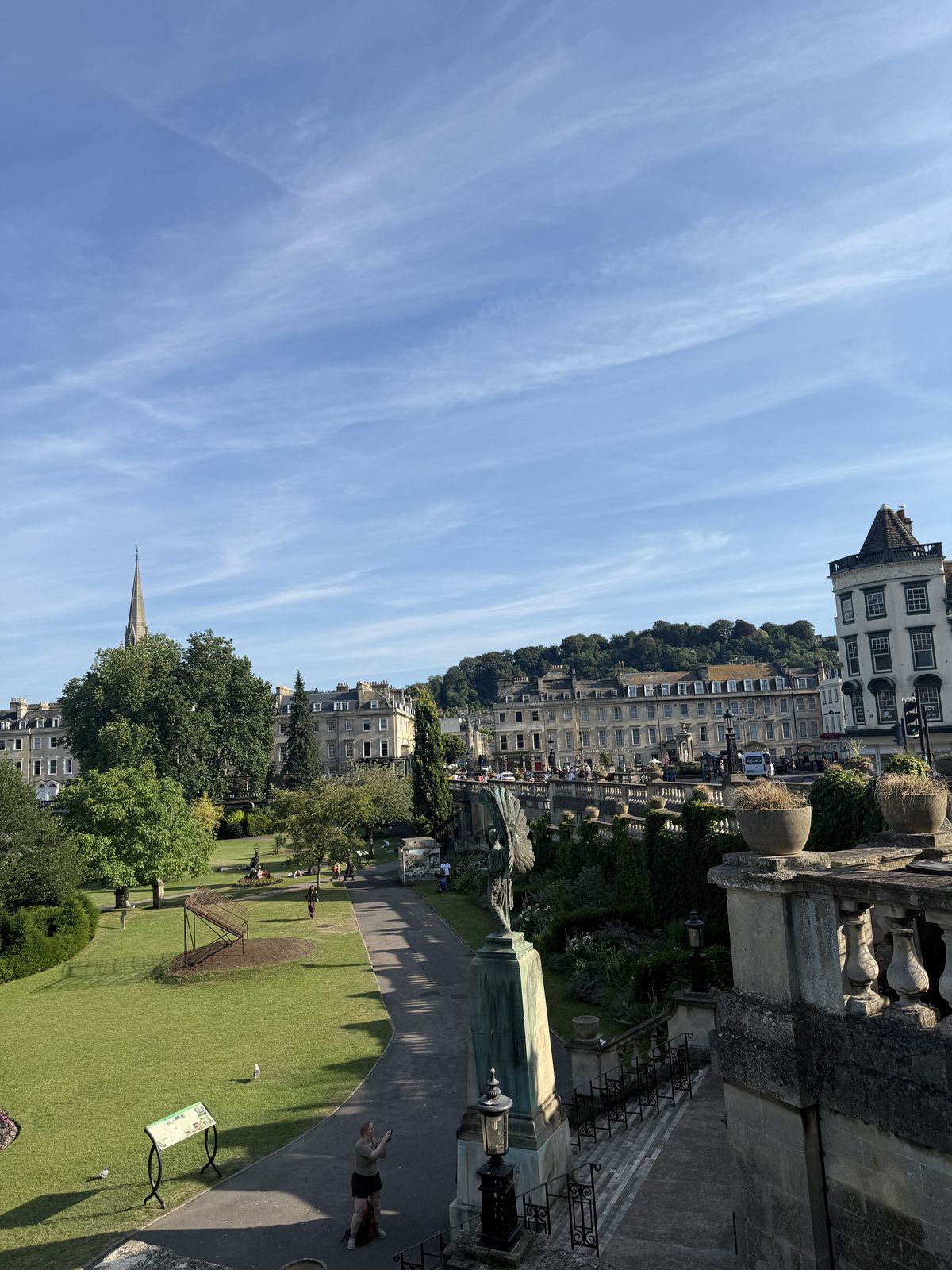
Timing rewards a little thought. May and September are the sweet spot most locals will point you to: gardens in leaf, comfortable walking temperatures, and terraces at the Roman Baths that are busy but not shoulder to shoulder. July and August bring the warmest days and the longest evenings, but also the deepest queues, which is exactly when a timed Roman Baths ticket booked in advance stops being optional. Winter is Bath's quiet secret. The crowds thin, the museums breathe, and from late November the Christmas market wraps around the Abbey with well over a hundred chalets. September also carries the Jane Austen Festival, when Regency costume fills the streets. Whatever the month, Visit Bath keeps the current events calendar.
| Season | Weather | Crowds | Daylight | What it adds |
|---|---|---|---|---|
| Spring (Apr to May) | Mild, changeable | Moderate | Lengthening | Gardens in leaf, easy walking |
| Summer (Jun to Aug) | Warmest | Heaviest | Longest | Long evenings, book everything |
| Autumn (Sep to Oct) | Mild, softer light | Moderate | Shortening | Sept: Jane Austen Festival |
| Winter (Nov to Feb) | Cold, often wet | Lightest | Shortest | Christmas market, quiet museums |
A wet or short-daylight day is no reason to stay home. The Roman Baths, the Abbey and the city's museums are all indoor or covered, so a grey winter afternoon suits Bath's headline sights better than you would expect. The only real adjustment cold and dark ask of you is to front-load the outdoor views, the crescents and Pulteney Bridge, into the brighter middle of the day.
Frequently asked questions
Is one day enough to see Bath?
Yes for the main sights. Walked in the right order, one day covers the Roman Baths, Bath Abbey, The Circus, the Royal Crescent and Pulteney Bridge comfortably, with time for lunch. A second day lets you add a spa session, Prior Park and a slower pace.What should I see first in Bath?
The Roman Baths. Go at or shortly after opening to beat the crowds, since the site fills up by late morning in summer. Bath Abbey is right next door, making it an easy second stop.How much walking is involved in a day in Bath?
A fair bit, but all within a compact centre. The main effort is the gentle uphill walk from the centre to The Circus and the Royal Crescent. Wear comfortable shoes, as the streets are historic and sometimes cobbled.Can I do the Roman Baths and Thermae Bath Spa in the same day?
Yes, but it is tight, because each takes time and they are separate sites. If you want a relaxed spa session, consider doing the historic sights in the morning and the spa in the late afternoon, and book both ahead.Do I need to book anything in advance?
Book a timed ticket for the Roman Baths ahead in summer, and book Thermae Bath Spa in advance if you plan to visit. Bath Abbey sells sightseeing tickets online and on arrival; check visiting hours around services.Plan your next step
City walk & Roman Baths entry
Have a travel date in mind? Pair a Blue Badge guided city walk with a self-guided visit inside the Roman Baths. Check your date before arranging the rest of your day.
About 3 hours; meet outside Bath Abbey’s main doors. Roman Baths entry and audio guide included; your guide does not lead the visit inside.
Start with this option, or compare the choices below.
Choose a date to see the published schedule.
Compare the options for your Bath plans
| Experience | Why choose it | Allow | What to account for |
|---|---|---|---|
| City walk & Roman Baths entry | Pair a Blue Badge guided city walk with a self-guided visit inside the Roman Baths. | 3 hours | About 3 hours; meet outside Bath Abbey’s main doors. Roman Baths entry and audio guide included; your guide does not lead the visit inside. |
| Roman Baths entry & audio guide | Explore the Great Bath, temple remains and museum at your own pace. | 2 hours | Timed admission in Bath with an audio guide. Allow 1½–2 hours as a planning estimate; no bathing or London transport. |
| Georgian Bath walking tour | Read the details of the Circus, Royal Crescent and quiet Georgian streets with a local guide. | 3 hours | Allow 2–3 hours; meet and finish at Bath Abbey. Exterior sightseeing on foot; paid interiors and travel to Bath are separate. |
| Afternoon tea at the Regency Tea Room | Make time for sandwiches, cakes, a warm scone and tea in an Austen-inspired setting. | 1 hours | One hour at 40 Gay Street, Bath. This is the Regency Tea Room, not the Pump Room or Sally Lunn’s; check dietary arrangements before booking. |
| Bath ghost walk | Follow a theatrical evening trail through Bath’s haunted streets and take part in ghostly experiments. | 1.75 hours | About 1¾ hours; start outside Bath Abbey, finish at Queen Square. English guided walk; allow time to reach your return train. |