Afternoon Tea in Bath: The Pump Room, Sally Lunn's and the Ritual
A first-person guide to afternoon tea in Bath, from the grand Pump Room above the Roman Baths to the historic Sally Lunn bun, and how to do the ritual honestly.
 By James Thornton, London to Bath day tour guide & heritage specialist
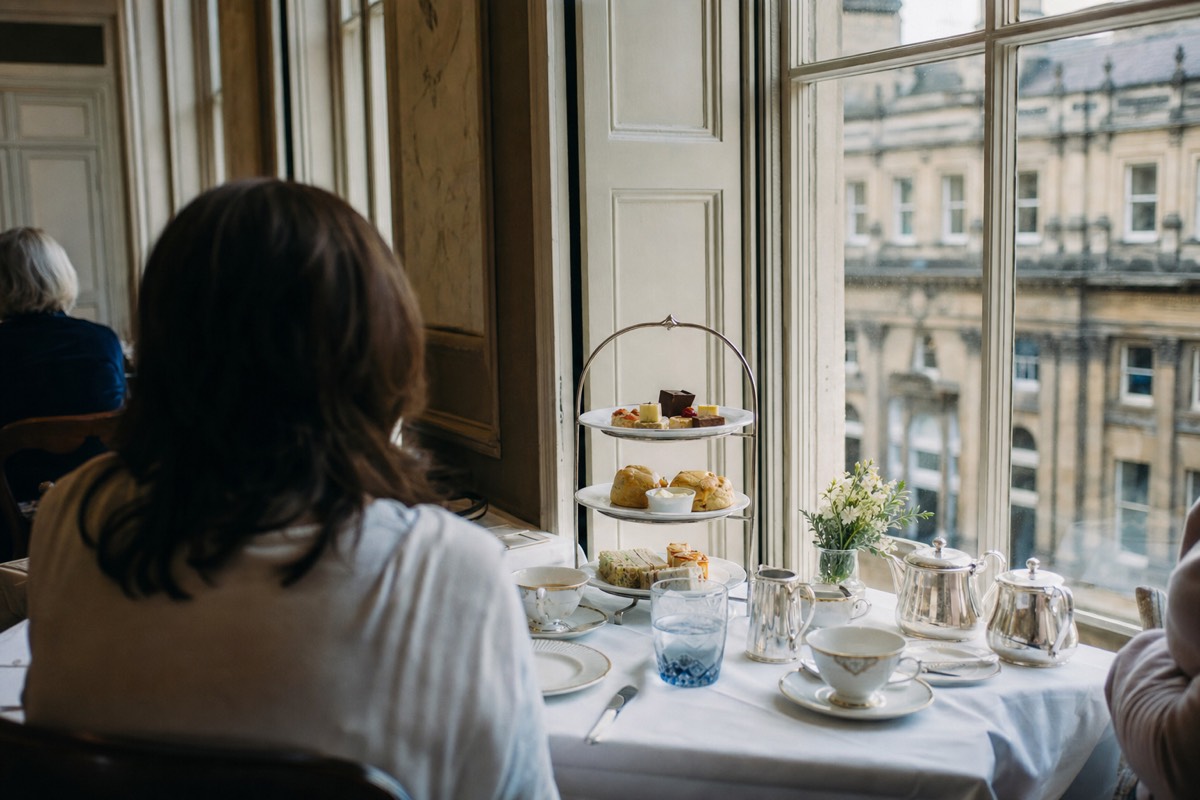
The first proper thing I ate in Bath was a warm bun the size of my two fists, split and buttered, in a low-ceilinged room where the floor slopes because the building is that old. That was Sally Lunn's, and it set the tone for the whole day. Bath takes tea seriously, not as a marketing gimmick but as something the city has genuinely been doing for a very long time.
There is a reason for that. Bath became fashionable as a spa town, a place people came to take the waters and be seen, and tea rooms grew up around that leisured, sociable life. You are not inventing a tradition when you sit down for afternoon tea here. You are joining one.
What is afternoon tea at the Pump Room actually like?
The Pump Room is Bath's grand afternoon tea: a high Georgian room directly above the Roman Baths, with columns, a fountain and often live music. You can take the full tiered tea or just a pot and a slice, and taste the warm spa water itself. Book ahead at busy times.
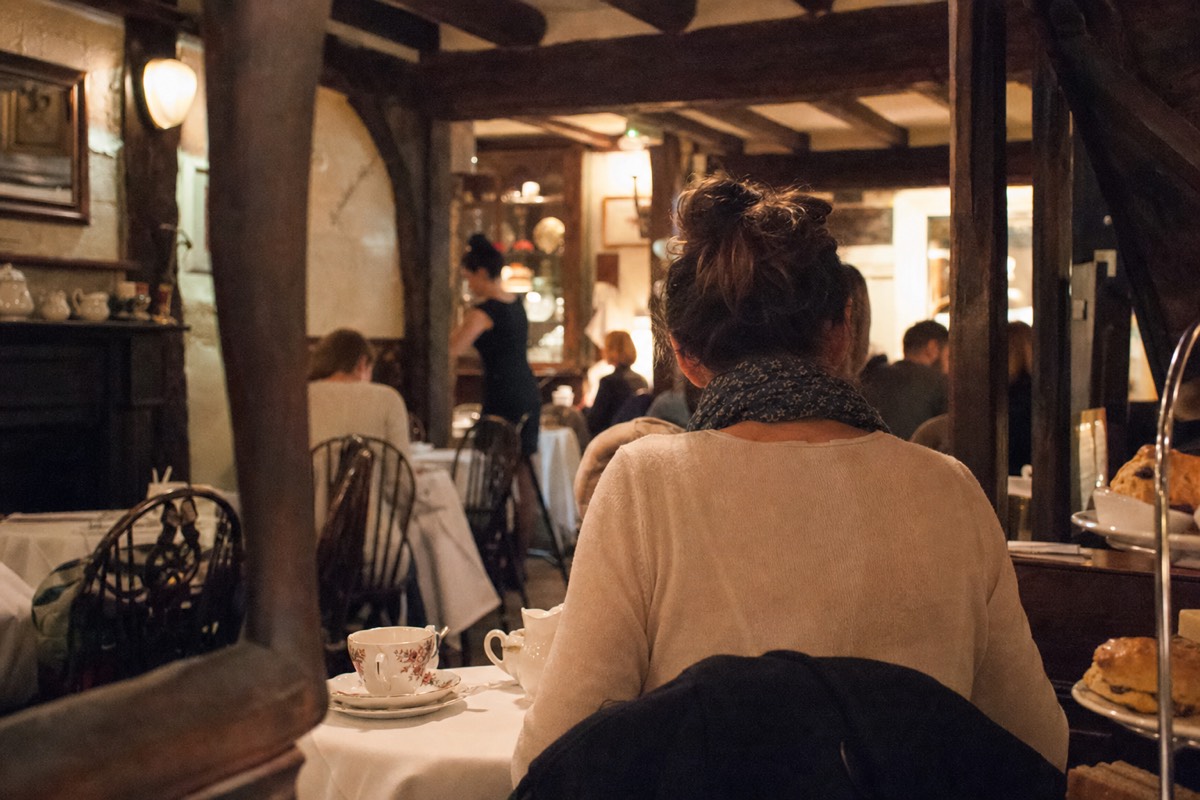
If you do one grand tea in Bath, make it the Pump Room. It sits directly above the Roman Baths and the effect is theatrical in the best way. This is where Regency society came to drink the spa water and gossip, and the room still carries that hum.
There is a quirk worth trying: you can taste a glass of the actual thermal water, drawn from the spring below, which pushes out over a million litres a day and rises at around 45 to 46C. I will be honest, it is warm and faintly mineral and not exactly delicious, but drinking it in that room is the point. Booking matters at busy times, especially for the full afternoon tea, so check the official site for current prices and to reserve. I am not going to quote you a figure, because these things move and I would rather you saw the real number than a stale one from me.
If you have never done a proper English afternoon tea, here is the honest shape of the thing you are ordering. It is more food than it looks, and it is meant to be slow. You are paying for the room, the ritual and an hour off your feet as much as the food itself.
| Tier | What arrives on it | The unwritten rule |
|---|---|---|
| Bottom | Finger sandwiches, savoury bites | Start here, work upwards |
| Middle | Scones with clotted cream and jam | Cream or jam first is your call, not mine |
| Top | Small cakes and pastries | Save room; this is the victory lap |
The eternal Bath argument, cream or jam first on the scone, has no correct answer and I refuse to referee it. Try it both ways. You are on holiday.
Why is the Sally Lunn bun such a big deal?
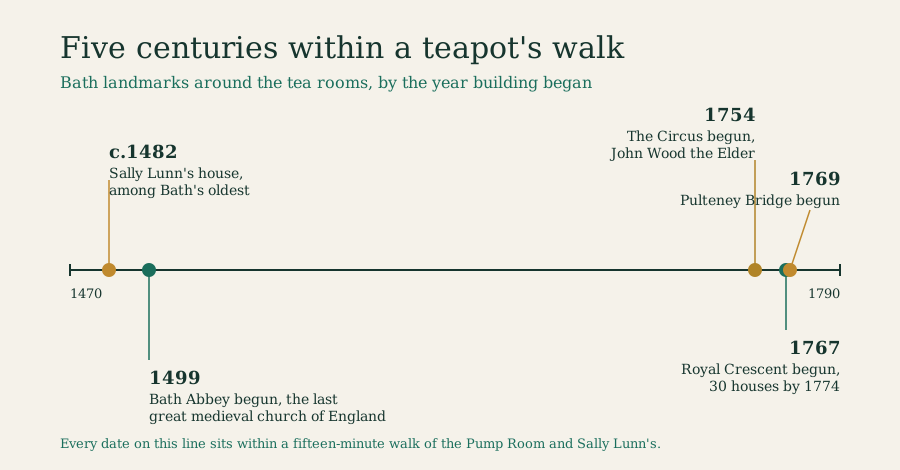
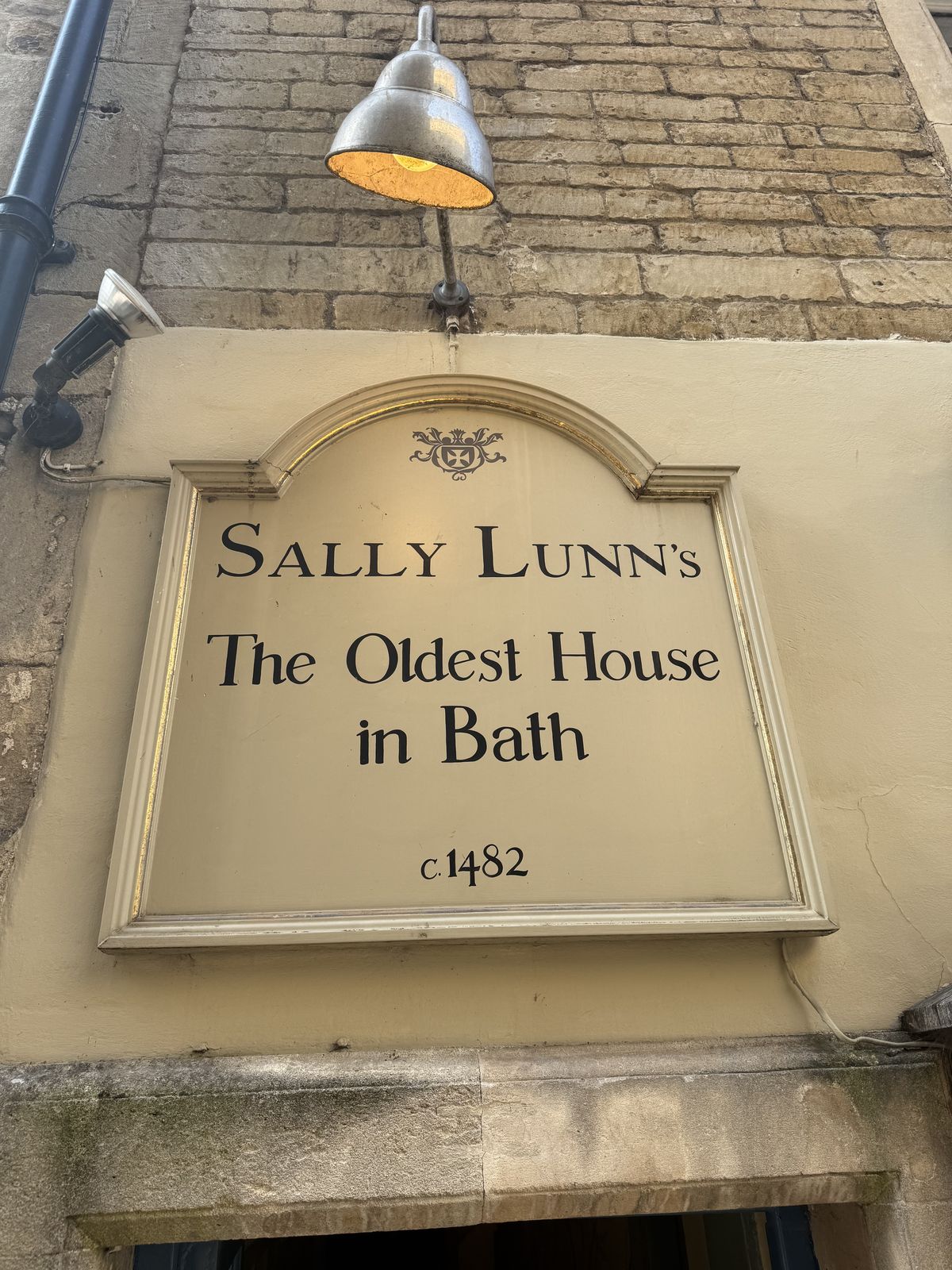
Sally Lunn's serves one thing brilliantly: a large, light, brioche-like bun, split and served warm, in a house dated to around 1482 that ranks among the oldest in Bath. It is simple food in a genuinely medieval building, savoury at lunch, sweet with butter and jam at teatime.
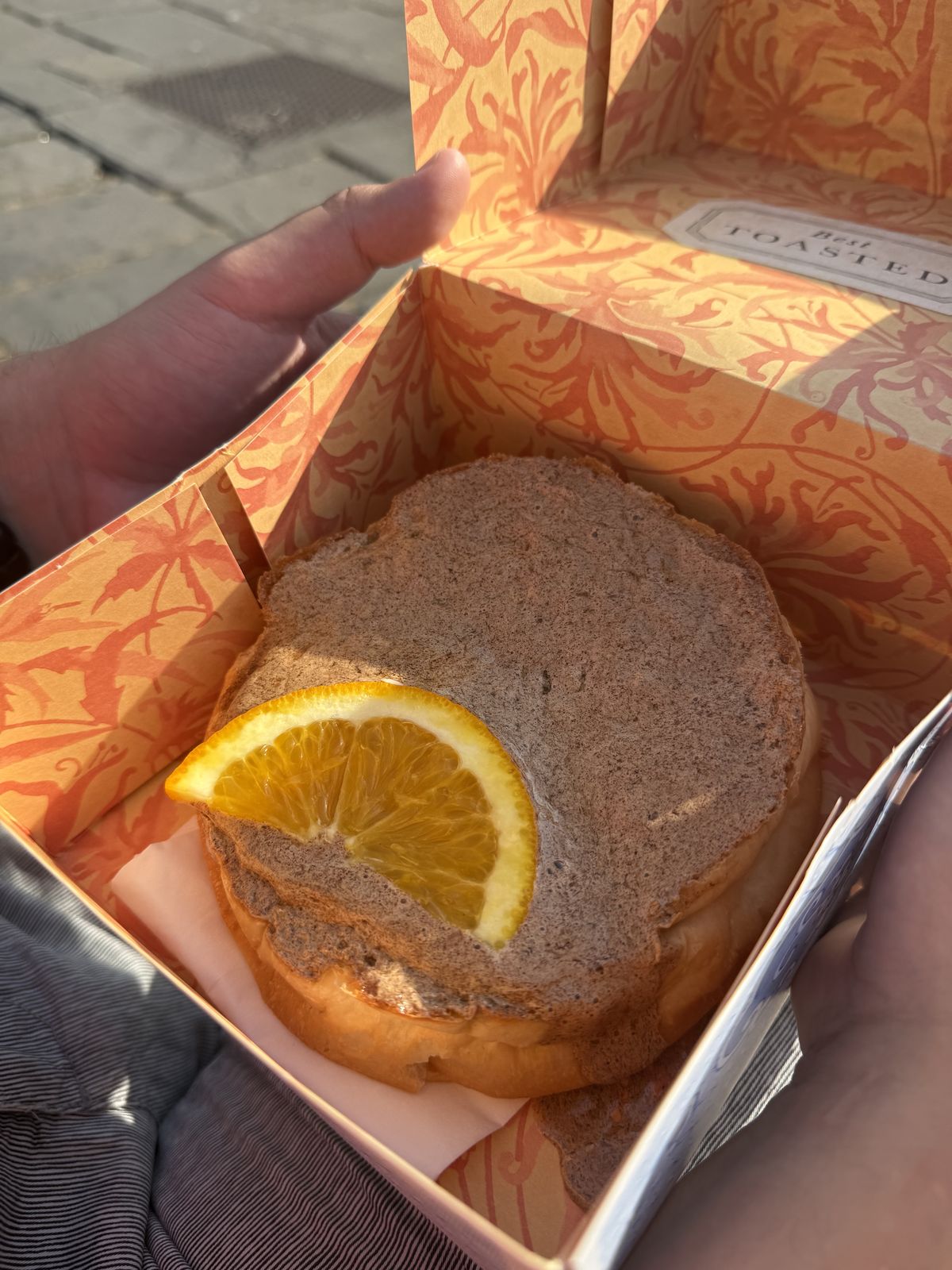
Down a tiny street near the Abbey, Sally Lunn's is built around one thing, and the house it occupies is dated to around 1482, which makes it older than almost everything you will walk past on the way there. It is not fancy. That is the charm. The rooms are small and creaky, you may queue, and the whole place feels like eating inside a piece of the city's history rather than a polished tea salon. There is a little kitchen museum below if the wait is long.
I went for the classic: bun, butter, tea, no fuss. It is the kind of simple thing you remember longer than a clever tasting menu.
The two headliners are genuinely different experiences, and Bath's independent tea rooms give you a third option when both are heaving.
| Where | The style | Booking | Best for |
|---|---|---|---|
| Pump Room | Grand Georgian room, tiered tea, live music | Reserve ahead for the full tea | The occasion, the room, the spa water |
| Sally Lunn's | Low-ceilinged medieval house, the famous bun | Walk in; expect a queue at peak | History you can eat, simply |
| Independent tea rooms | Small rooms, good scones, a proper pot | Rarely needed | Skipping the queue without losing the ritual |
How do you fit afternoon tea into a day trip from London?
Do the walking first and let tea be the reward. The fastest direct train from London Paddington reaches Bath Spa in 1 hour 19 minutes, with around 72 trains on a weekday, so you can see the Roman Baths and the Crescent, then sit down mid-afternoon.
Afternoon tea works beautifully as the punctuation mark of a Bath day trip. Do the walking first, the Roman Baths, the Abbey, the sweep of the Royal Crescent, and let tea be the reward when your legs have had enough. Because the city is so compact, you are never more than a few minutes from a table.
If the Pump Room is fully booked or Sally Lunn's has a queue out the door, you still have options. Bath has a strong independent tea and cafe scene beyond the headliners, and the official Visit Bath site keeps a current list of who is pouring. Plenty of small tea rooms and bakeries around the centre do good scones and a proper pot without the wait. If you want a wider sense of eating in the city across the whole day, my where to eat in Bath post covers pubs and lunch spots as well. One honest note: if you are chasing fine dining or a specific award, check the current guide rather than taking my word on stars, because these things change year to year.
| Getting to your table | Time | Worth knowing |
|---|---|---|
| Fastest direct train, Paddington to Bath Spa | 1 hour 19 minutes | Drops you a short walk from the centre |
| Train frequency on a weekday | Around 72 services | No need to build the day around one departure |
| Guided day tour from London | Full day, London meeting point | Travel handled both ways, free time for tea |
If you would rather not think about train times at all, a guided day tour to Bath from London takes care of the travel and gives you free time in the city to find your own table. For the bigger picture of what to squeeze into the hours you have, the one day in Bath guide helps you build the day around the tea rather than the other way round.
My advice, earned over one very full afternoon, is not to over-plan the tea itself. Book the grand one if you want the Pump Room, walk into the historic one for the bun, and leave a gap in the schedule so you can actually sit and drink the second cup. That second cup, poured slowly while your feet recover, is the whole point of tea in Bath.
Plan your next step
Afternoon tea at the Regency Tea Room
Have a travel date in mind? Make time for sandwiches, cakes, a warm scone and tea in an Austen-inspired setting. Check your date before arranging the rest of your day.
One hour at 40 Gay Street, Bath. This is the Regency Tea Room, not the Pump Room or Sally Lunn’s; check dietary arrangements before booking.
Start with this option, or compare the choices below.
Check dates on GetYourGuide
Check dates for Afternoon tea at the Regency Tea RoomUse this booking link if the calendar does not load.Compare the options for your Bath plans
| Experience | Why choose it | Allow | What to account for |
|---|---|---|---|
| Afternoon tea at the Regency Tea Room | Make time for sandwiches, cakes, a warm scone and tea in an Austen-inspired setting. | 1 hours | One hour at 40 Gay Street, Bath. This is the Regency Tea Room, not the Pump Room or Sally Lunn’s; check dietary arrangements before booking. |
| Private Bath food tasting walk | Taste local artisan food and drink while a private guide connects the stops with Bath’s history. | 3 hours | Allow 2½–3 hours; meet at Bath Abbey. Four or five samples, with exterior sightseeing. Dietary requests need confirmation; this is not a booked pub lunch. |