Bath and the Cotswolds in a Day: What the Combo Is Really Like
Pairing Bath with Cotswolds villages like Castle Combe, Lacock and Bibury in one day. What the mix feels like, and whether to take a tour or drive it yourself.
 By James Thornton, London to Bath day tour guide & heritage specialist
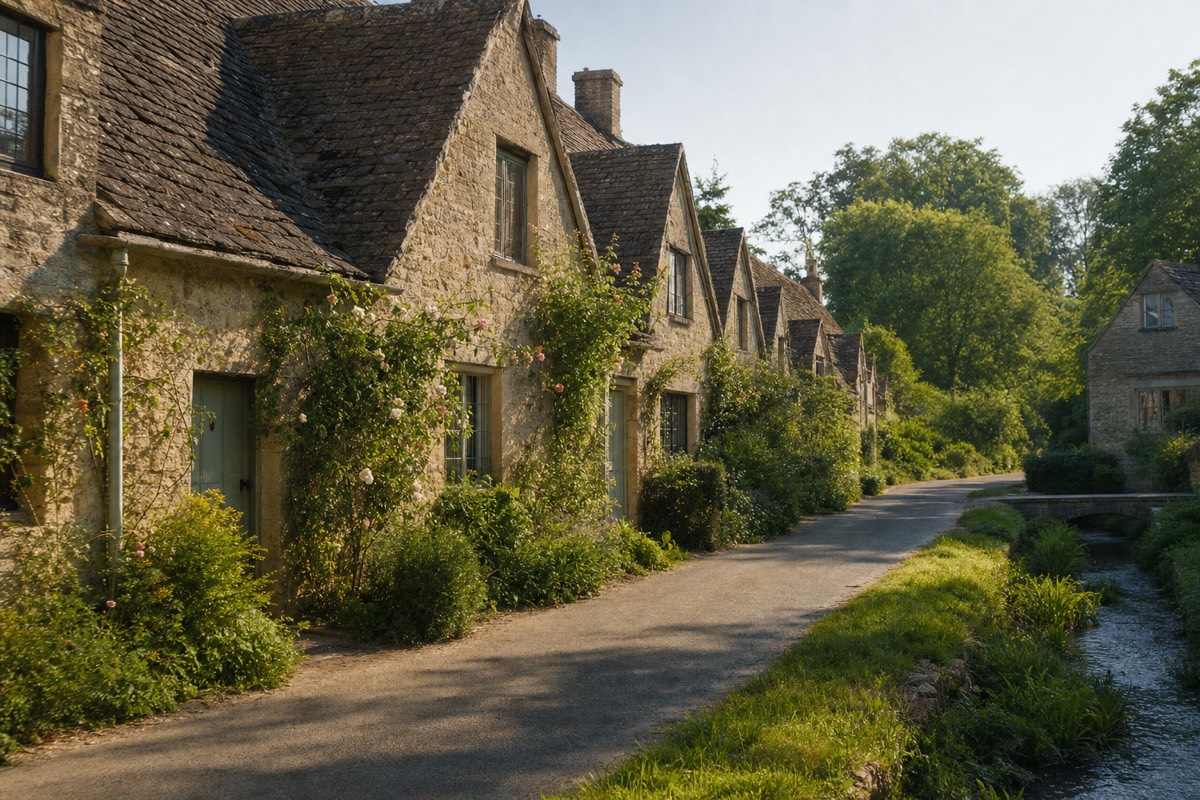
The thing that clicked for me halfway through the day was the stone. You spend the morning in Bath surrounded by golden Georgian terraces, then you drive twenty minutes into the countryside and the exact same honey-coloured stone reappears, only now it is a tiny village with a stream running past the doorsteps. Bath and the Cotswolds are made of the same rock. Pairing them is not a random two-for-one; it is the city version and the cottage version of one landscape.
I went in slightly sceptical that you could do both justice in a single day. You can, mostly, as long as you accept that "Cotswolds" on a day trip means one or two villages, not the whole region.
Why do Bath and the Cotswolds work so well together?
Because they are built from the same honey coloured limestone, and they sit next door to each other. Bath is the grand city expression of the stone, the Cotswolds the cottage version, and the countryside starts within about twenty minutes of the Georgian terraces. One day gives you both moods of a single landscape.
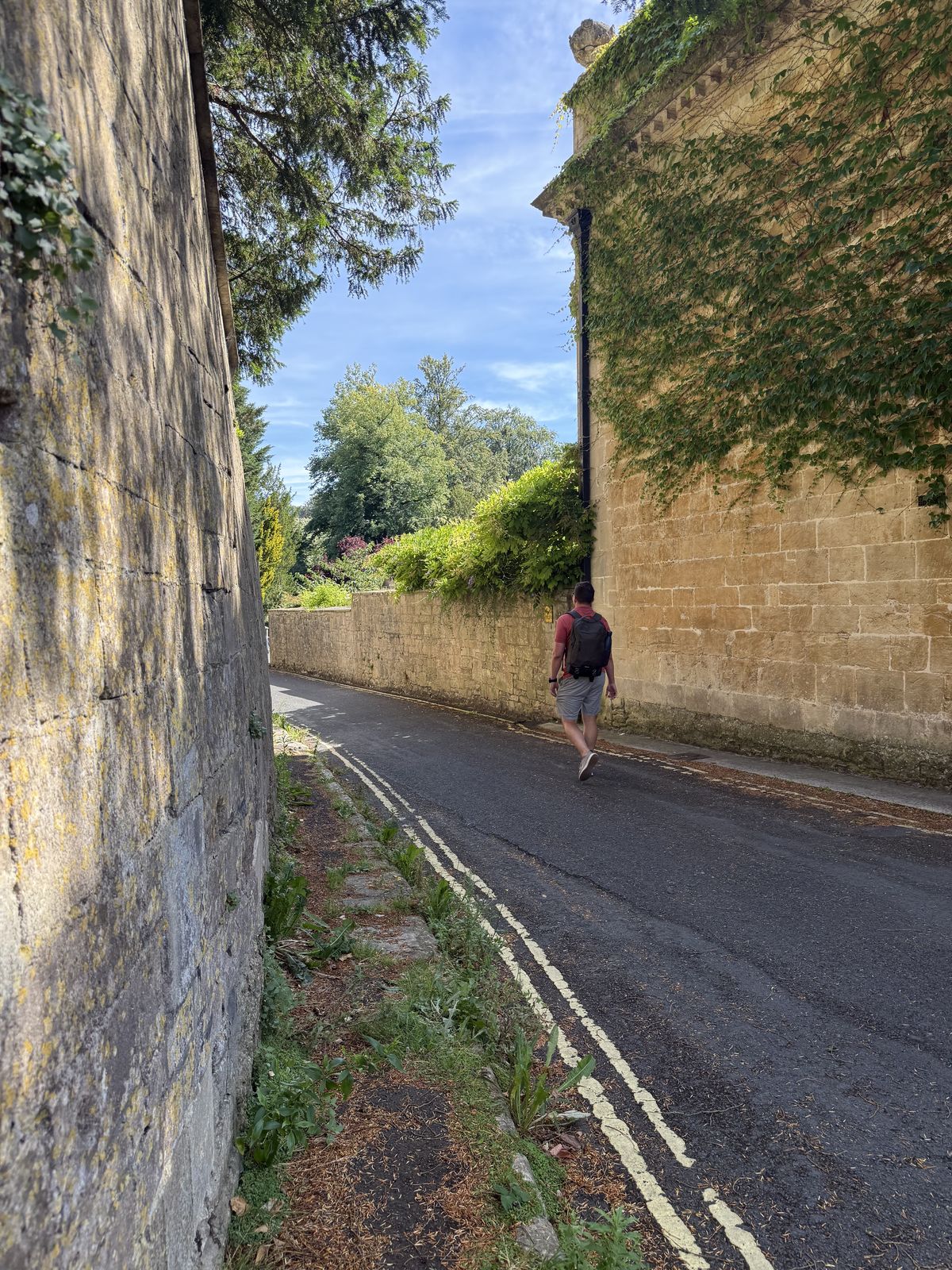
The Cotswolds National Landscape covers 787 square miles of rolling hills and honey-stone villages, and it starts more or less on Bath's doorstep, close enough that the countryside feels like Bath's back garden. That is the whole appeal of the combo. You get the grand, dense, walkable city, then you soften the day with lanes, streams and cottages that look painted.
The villages people mean when they say Cotswolds on these trips are usually a short list. Castle Combe often gets called the prettiest village in England, a single street of golden cottages tucked in a wooded valley with an old market cross. Lacock is a National Trust village that has starred in more period dramas than I can count, all timber frames and unspoiled streets, with an abbey on the edge. Bibury has the famous row of steep-roofed weavers' cottages, Arlington Row, beside a clear trout stream. Bourton-on-the-Water gets the nickname "Venice of the Cotswolds" for the little bridges over its river. No single day gets you all of them, so tours pick two or three that sit close together.
The switch between city and village is the best part. You leave the busy, echoing streets of Bath, and within half an hour you are standing on a silent lane where the loudest sound is water over stones. In Castle Combe I walked the whole village in about fifteen minutes and then just sat by the bridge, because there is nothing to "do" and that is the point. Lacock rewards a slow wander into the abbey grounds. Bibury is basically one perfect photograph you take slowly.
A word of honesty: these places are small and can get busy, especially in summer and on weekends. Go with the flow of it rather than fighting for a crowd-free shot. Late spring and early autumn are the sweet spot for thinner crowds and decent weather, which holds true for Bath too, and I dig into that in my best time to visit Bath guide.
| Village | What it is known for | Worth knowing |
|---|---|---|
| Castle Combe | Often called the prettiest village in England, one street in a wooded valley with an old market cross | Walk it in fifteen minutes, then sit by the bridge |
| Lacock | National Trust village and period drama regular, with an abbey on the edge | Give the abbey grounds a slow wander |
| Bibury | Arlington Row, the famous line of steep-roofed weavers' cottages by a trout stream | One perfect photograph, taken slowly |
| Bourton-on-the-Water | Nicknamed the Venice of the Cotswolds for the little bridges over its river | Tours usually pair villages that sit close together |
What should you see in Bath before the villages?
Front load the morning with the Roman Baths, then stay within a short walk. Bath Abbey is beside the exit, Pulteney Bridge two minutes on, and the Royal Crescent and The Circus a little uphill. Give the Baths an hour, ninety minutes if the schedule is kind, then head for the lanes.
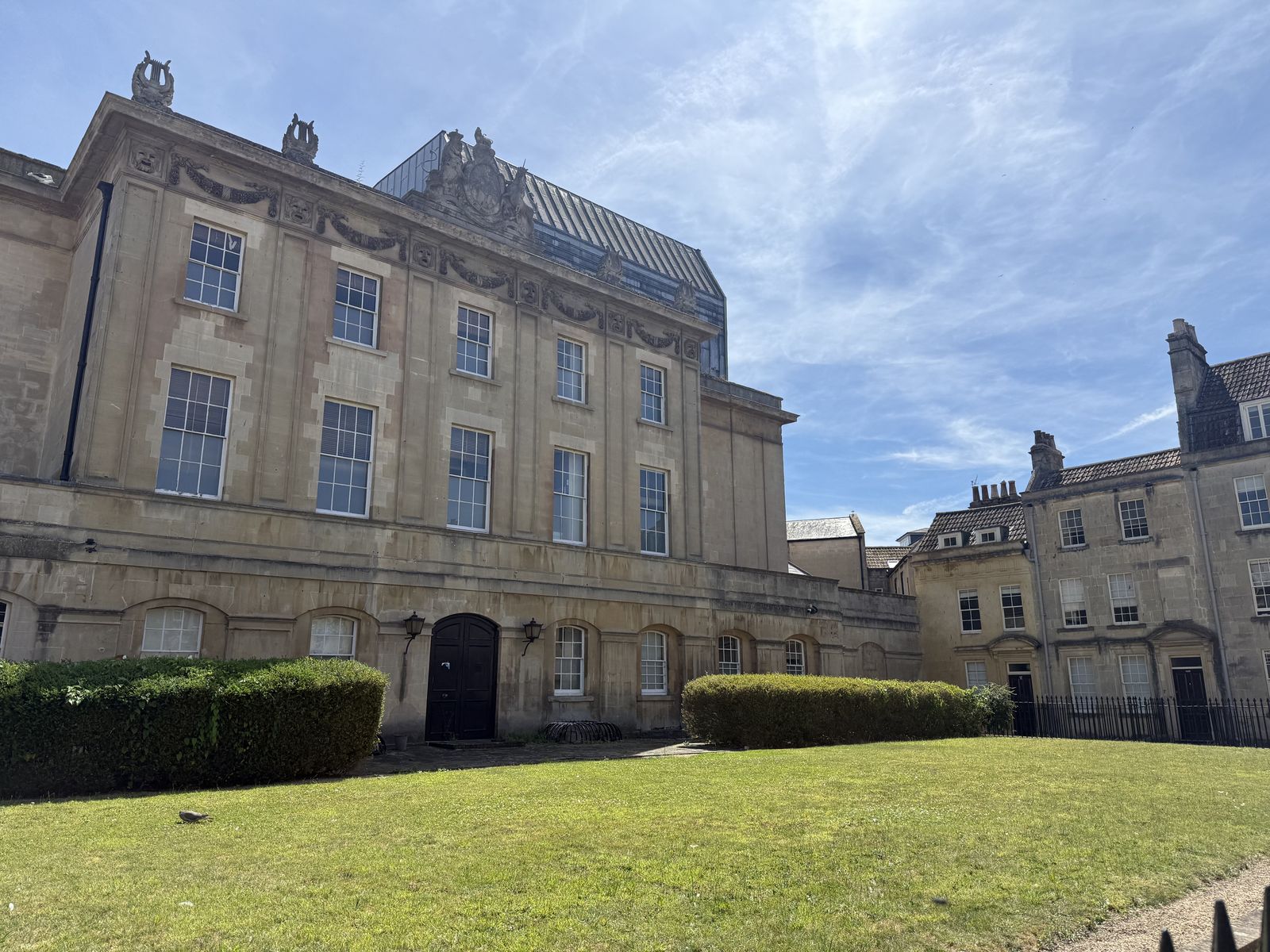
Start in Bath and you front-load the day with the heavy hitters. My rule for a compressed morning is simple: the Roman Baths, then whatever is within a short walk.
The Roman Baths are built around Britain's only naturally hot spring, and the water still comes up at around 46°C, steaming faintly on a cold morning. You walk the terraces above the Great Bath, which is that odd algae green because it sits open to the sky. The museum holds the gilded head of Sulis Minerva and a carved Temple pediment with a glaring Gorgon face. It is genuinely worth an hour and a half, though on a two-stop day you may trim it to an hour. Book a timed slot ahead on the Roman Baths' official site, because summer walk-up slots vanish.
Right beside it is Bath Abbey, its west front carved with angels climbing ladders. A two-minute stroll takes you to Pulteney Bridge with shops built along its full span and the horseshoe weir tumbling below. If the timing is kind, walk up to the Royal Crescent, thirty townhouses in one long curve, and The Circus just above it. Then it is out to the villages. For a fuller morning plan, my guide on what to do in Bath in one day lays out a tighter route.
| Stop | Walk from the last one | Time to give it |
|---|---|---|
| Roman Baths | Start here | An hour, ninety minutes if you can spare it |
| Bath Abbey | Steps from the Baths exit | A look up at the angels on the west front |
| Pulteney Bridge and the weir | Two minutes | A photo stop that always runs long |
| Royal Crescent and The Circus | A short uphill walk | Only if the clock is kind |
Should you take a tour or drive the Cotswolds yourself?
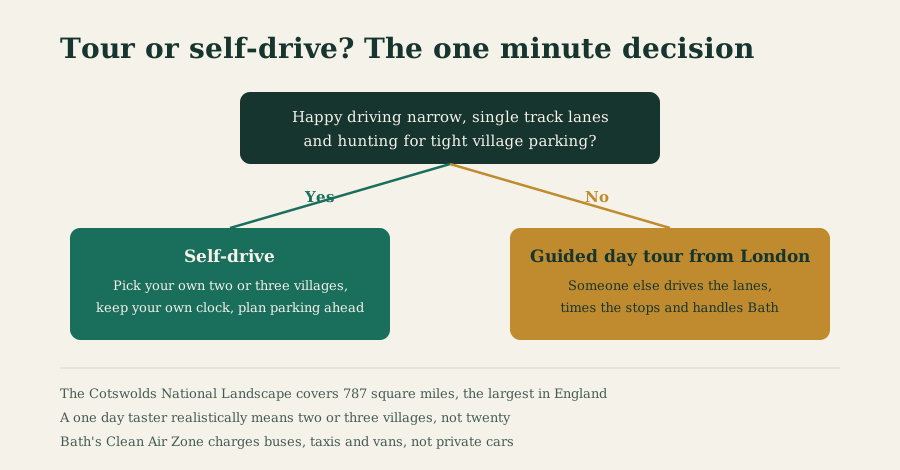
Drive yourself only if narrow single track lanes and tight village parking do not bother you. The freedom is real, and so is the stress. A guided tour from London solves the driving, the parking and the reach problem in one go, because the villages are genuinely awkward by public transport alone.
This is the real decision, so here is my take from doing it.
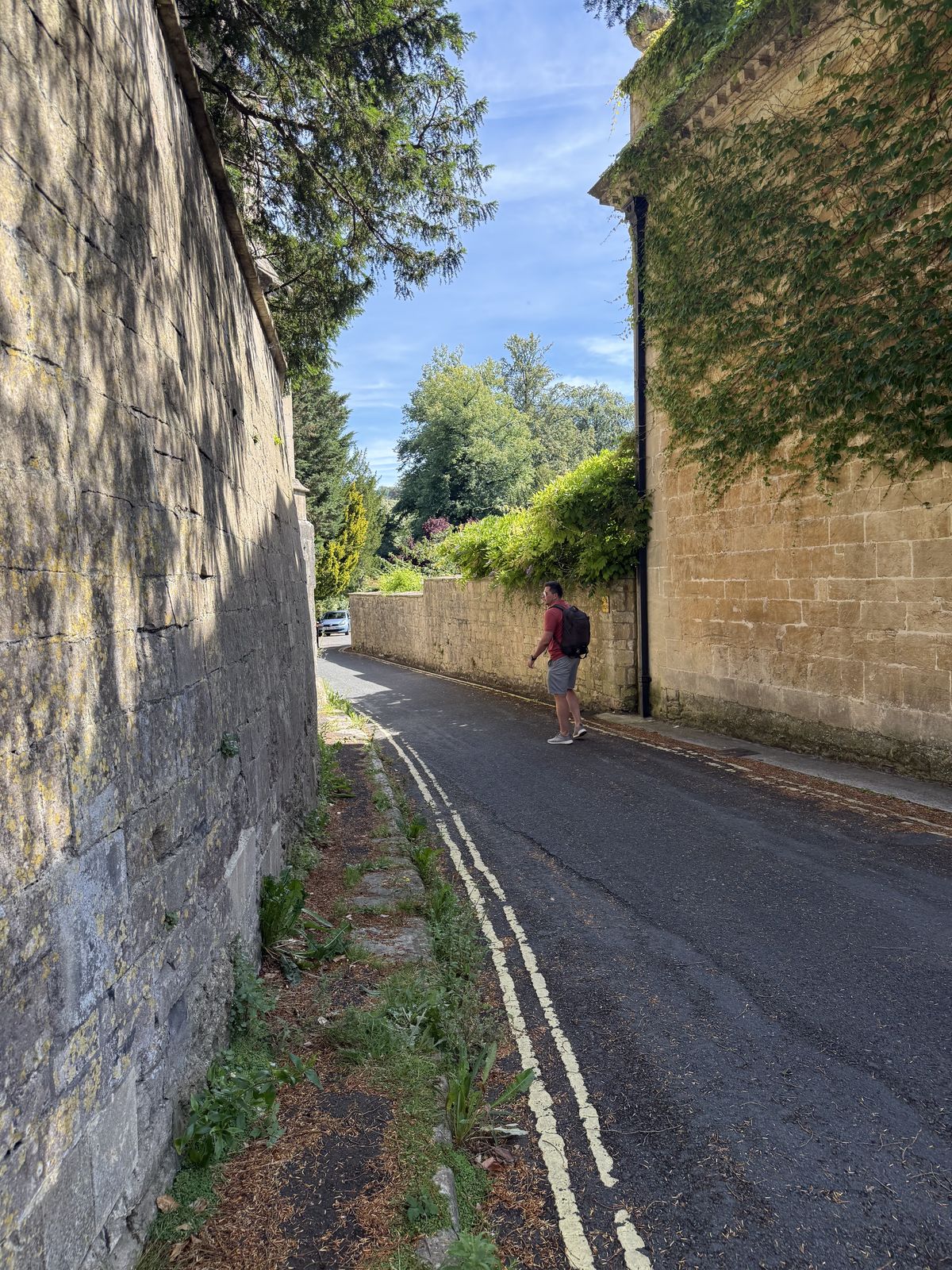
Self-drive gives you total freedom. You choose the villages, you linger where you like, you stop for a pub lunch on your own clock. The catch is the driving. Cotswolds lanes are narrow, winding and often single-track with passing places, and parking in the pretty villages is tight and sometimes non-existent. Bath itself has a Clean Air Zone, though a private car pays nothing in it; the real cost is central parking, expensive and limited enough to push you toward Park and Ride. If you are relaxed behind the wheel on small roads, it can be a lovely day.
| The question | Self-drive | Guided tour |
|---|---|---|
| The lanes | Narrow, winding, often single track with passing places | Someone else's problem |
| Village parking | Tight and sometimes non-existent | Not your problem either |
| Bath traffic | No Clean Air Zone charge for a private car, but central parking is dear and limited | You are driven in and out |
| Reaching the villages from London | Realistic only with a car | Solved by the coach |
| Your clock | Entirely yours, pub lunch included | The group's timetable |
If you are not relaxed on small roads, or you simply do not want to spend the day map-reading, a small-group Castle Combe, Stonehenge and Bath tour takes all of that off your plate. Someone else drives the lanes, knows where to stop, and times it so you actually see the city and the countryside instead of a car park. I will not print a price, because it changes; the current cost is on the operator's listing. Coming from London, a tour also solves the "how do I even reach the Cotswolds without a car" problem, which by public transport alone is genuinely awkward. If you are basing yourself in Bath rather than travelling out from London, a full-day Cotswolds tour that departs from Bath itself covers the villages without the drive, a separate booking from the featured London day tour, and you can check prices and times here.
If you love countryside more than cities, this combo might just be your favourite day out from London. The contrast does the work. A grand Roman and Georgian city in the morning, then a hush of golden cottages and streams in the afternoon, all built from the same warm stone. Just set your expectations to two villages, not twenty, and let someone else drive if the lanes make you nervous. I came home planning a return trip for the Cotswolds alone, which is probably the best thing I can say about a taster day.
Plan your next step
Castle Combe, Stonehenge & Bath from London
Have a travel date in mind? Combine a Castle Combe stop with time in Bath and Stonehenge on one small-group day. Check your date before arranging the rest of your day.
About 11½ hours from London. Stonehenge admission costs extra; Roman Baths entry and meals are not included. Minimum age 3.
Start with this option, or compare the choices below.
Choose a date to see the published schedule.
Compare the options for your Bath plans
| Experience | Why choose it | Allow | What to account for |
|---|---|---|---|
| Castle Combe, Stonehenge & Bath from London | Combine a Castle Combe stop with time in Bath and Stonehenge on one small-group day. | 11.5 hours | About 11½ hours from London. Stonehenge admission costs extra; Roman Baths entry and meals are not included. Minimum age 3. |
| Cotswolds villages from Bath | Explore Castle Combe, Bibury, Stow-on-the-Wold and Bourton-on-the-Water without driving. | 9 hours | About 9 hours; meet and return at the Abbey Hotel, Bath. Lunch is extra. Minimum age 7; London travel is separate. |