Jane Austen's Bath: A Literary Walk Through Her Georgian City
A first-person walk through Jane Austen's Bath: where she lived, the streets of Northanger Abbey and Persuasion, the Assembly Rooms and the September festival.
 By James Thornton, London to Bath day tour guide & heritage specialist
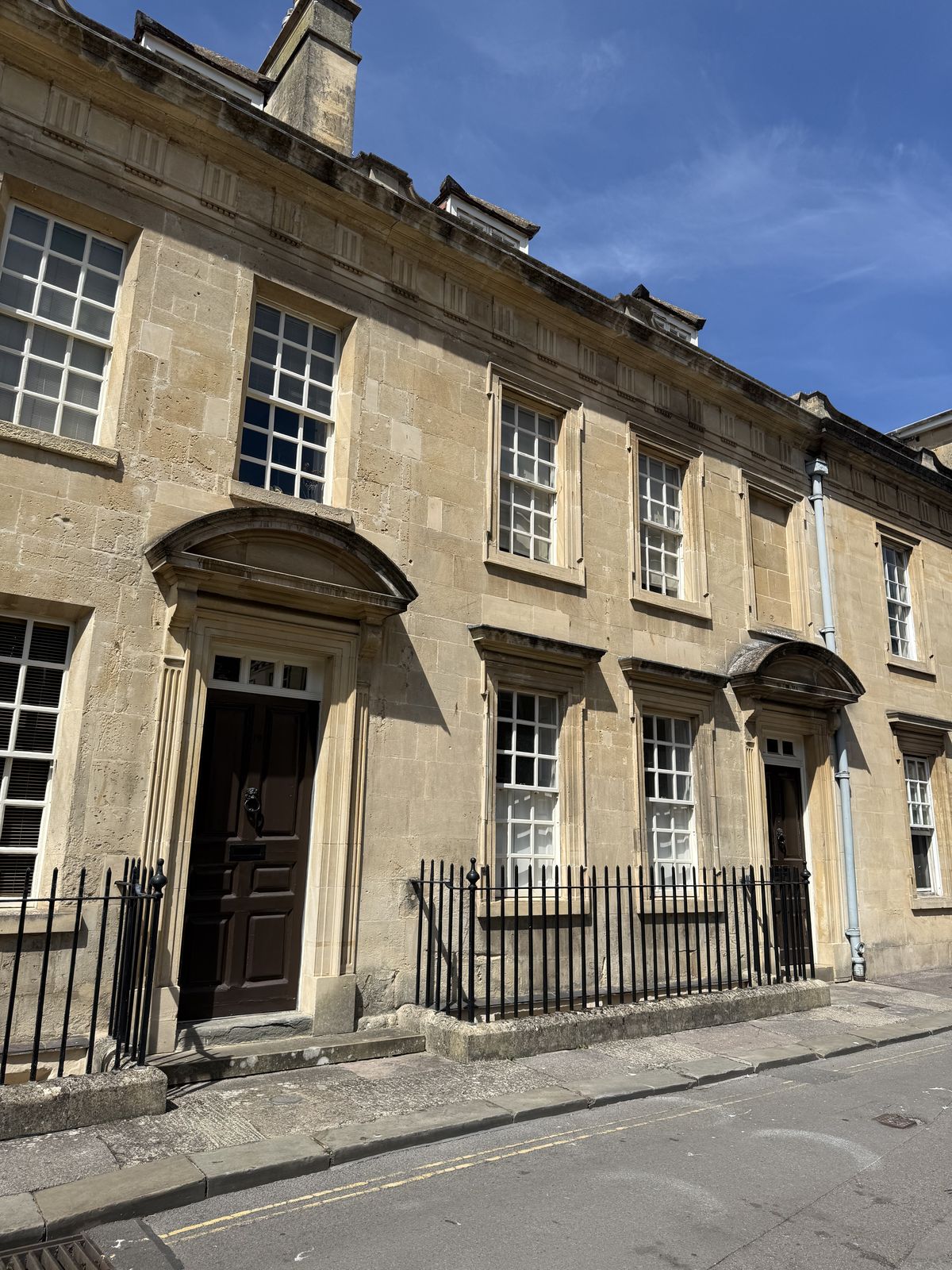
I came to Bath with a paperback of Persuasion in my bag, half-expecting to feel silly about it. I did not. You round a corner off Gay Street, the honey stone closes in over your head, and suddenly the distance between the page and the pavement collapses. Austen walked these exact streets. She grumbled about them in her letters. And that mix of glamour and irritation is the truest thing about literary Bath.
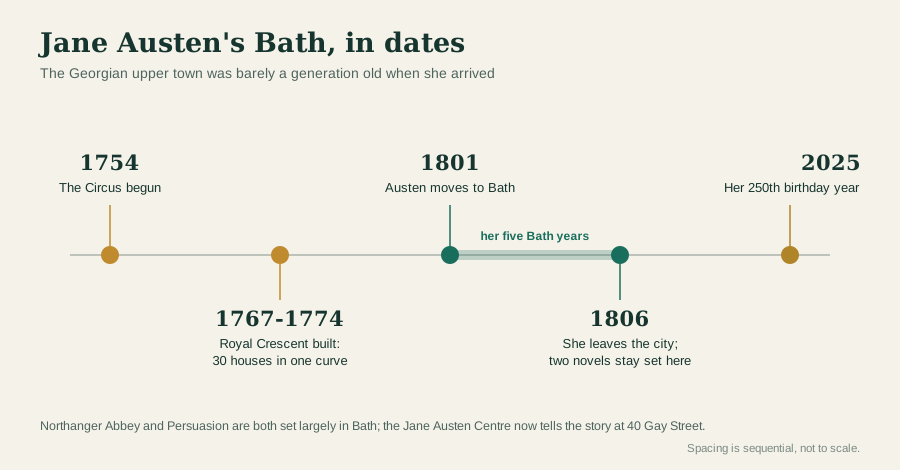
She lived here from 1801 to 1806, arriving as a young woman when her father retired and the family gave up the Hampshire rectory. The move was not her idea. By most accounts she was low for a good stretch of those years, and she wrote very little in Bath itself. What the city gave her instead was material. Two of her novels, Northanger Abbey and Persuasion, are set here, and both read like they were written by someone who knew precisely which drawing rooms were fashionable and which were merely trying.
Where did Jane Austen actually live in Bath?
Jane Austen lived in Bath from 1801 to 1806, after her father retired, and the family moved between several addresses including Sydney Place and the streets around Gay Street. The houses that survive are private Georgian homes today, so you trace her by walking the terraces rather than touring rooms.
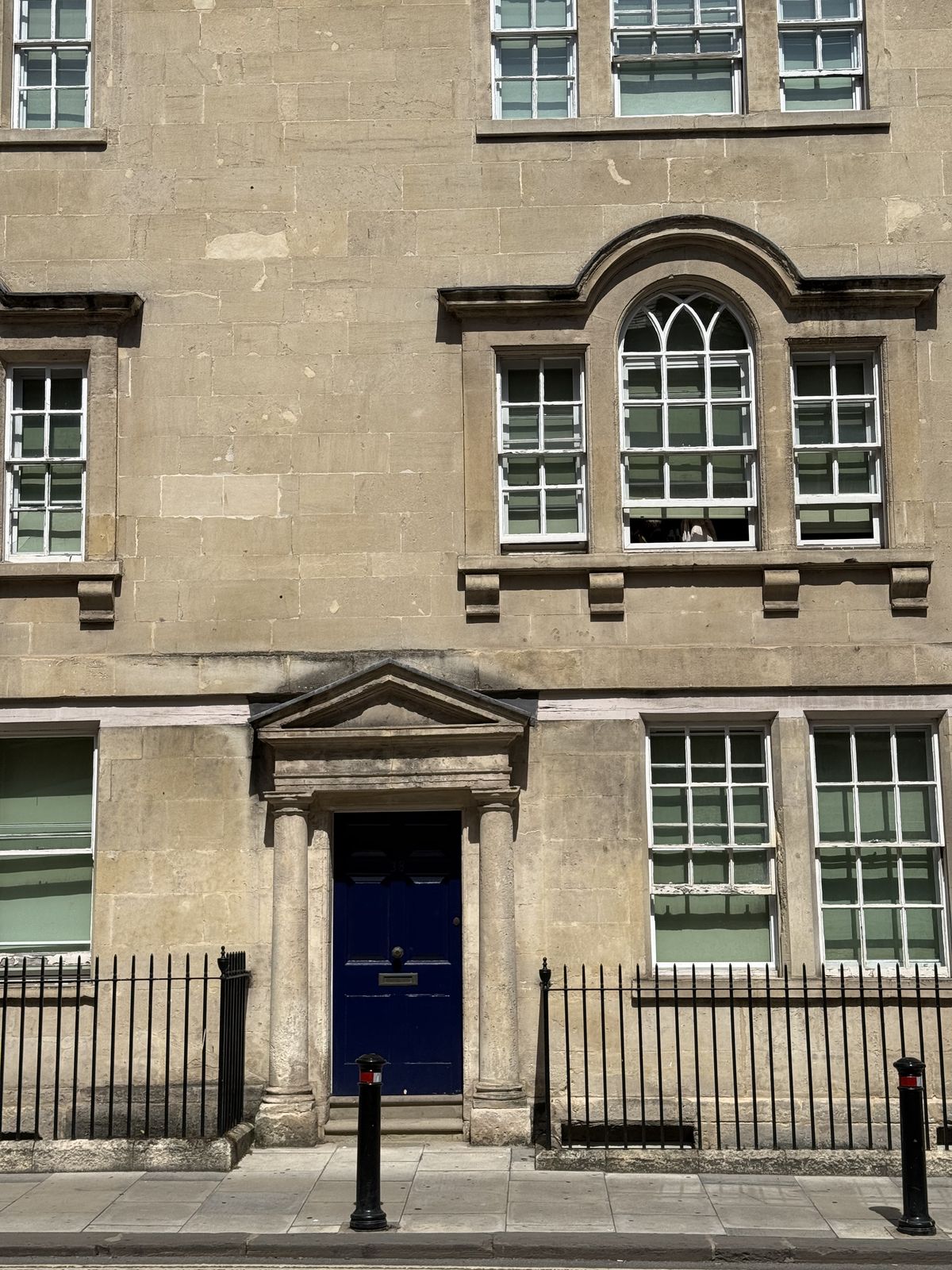
The Austens moved house more than once during their Bath years. The addresses that survive are ordinary Georgian terraces, most of them private homes now, so you look up at a window and imagine rather than go in. That is part of the pleasure. There is no velvet rope. You stand on Sydney Place or peer up Gay Street and the city looks much as it did, because so little of central Bath has been allowed to change.
I found the best approach was to stop treating it as a checklist. Bath is small and steep and walkable, and if you simply wander the upper town you pass her world by accident. The uniform stone, the tall sash windows, the iron railings, the fanlights over the doors: this is the backdrop of every ball and every awkward morning call in her books.
If you do want addresses to aim for, these are the ones that reward the walk.
| Place | The Austen connection | What you find today |
|---|---|---|
| Sydney Place and the streets off Gay Street | The family's Bath addresses, 1801-1806 | Private Georgian homes; admire from the street |
| 40 Gay Street | Home of the Jane Austen Centre | Costumed guides and Regency context |
| Assembly Rooms, Bennett Street | The balls of the season, straight out of the novels | Access varies with conservation work; check ahead |
| The Circus | Begun in 1754 by John Wood the Elder | Three curved segments of townhouses |
| Royal Crescent | The address her characters longed to be seen near | 30 houses built 1767-1774; No.1 is a museum |
Is the Jane Austen Centre worth visiting?
Yes, if you want context rather than relics. The Jane Austen Centre at 40 Gay Street is not her house and does not pretend to be, but its costumed guides explain Regency Bath's social rules so well that the ballroom scenes in the novels start reading as strategy rather than manners.
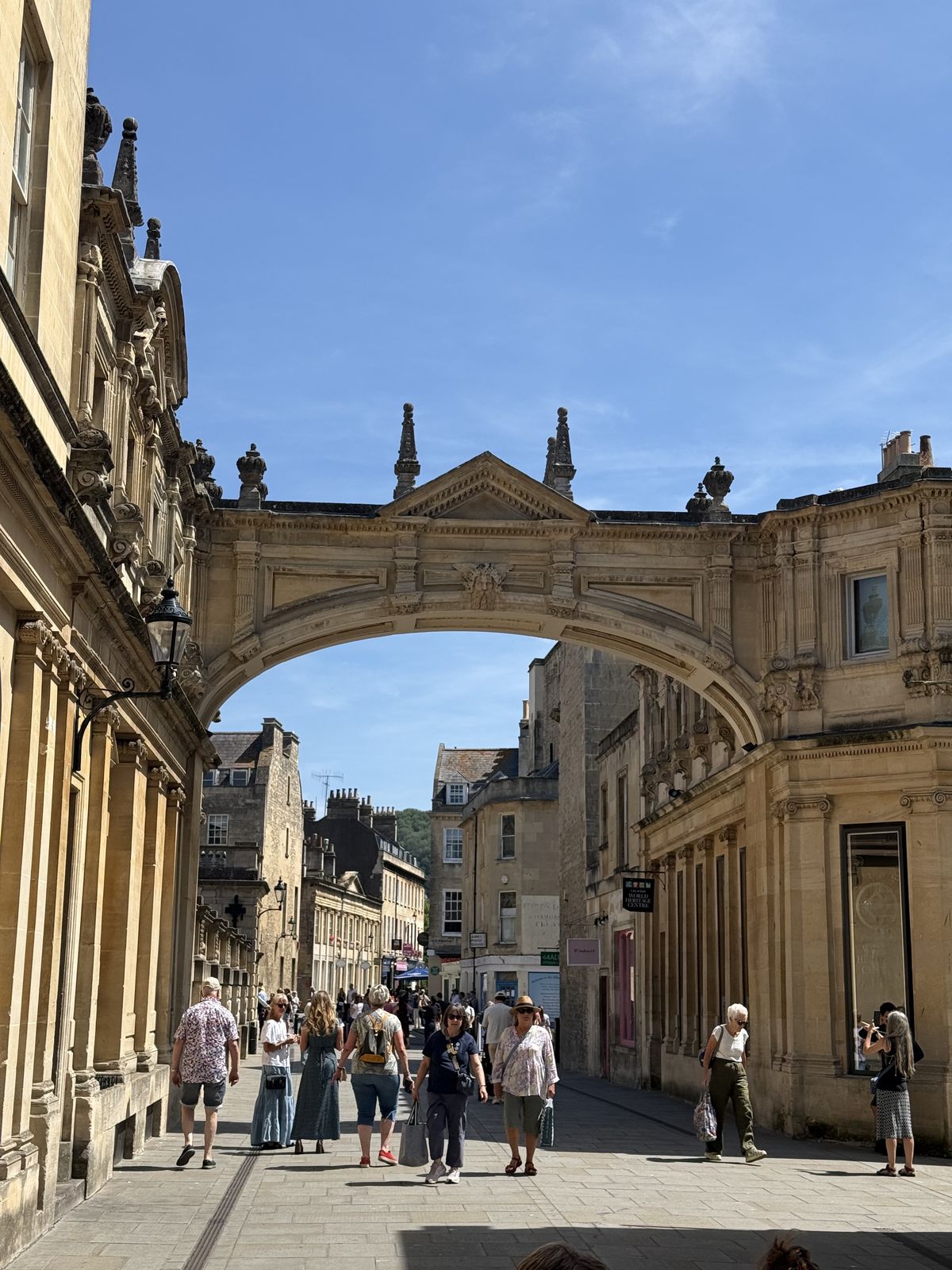
For the actual history I went to the Jane Austen Centre on Gay Street, a short climb up from Queen Square. It is not her house and does not pretend to be. What it does well is set the scene: Regency costume, the social rules a woman like Anne Elliot had to live by, the sheer performance of Bath society. There are guides in period dress, and yes, it leans into the fun of it. Check the Centre's official site for current opening times and tickets before you go, because timed entry can matter in summer.
If you have read the novels, the value here is context. You learn why a good marriage was survival and not just romance, and the ballroom scenes start to feel less like manners and more like strategy.
Where can you step into Northanger Abbey and Persuasion?
Both Bath novels play out in the upper town. Walk Bennett Street to the Assembly Rooms where Catherine Morland is dazzled, loop the Circus, begun in 1754, then follow the great thirty-house sweep of the Royal Crescent, built 1767 to 1774, the address every Austen character wanted to be seen near.
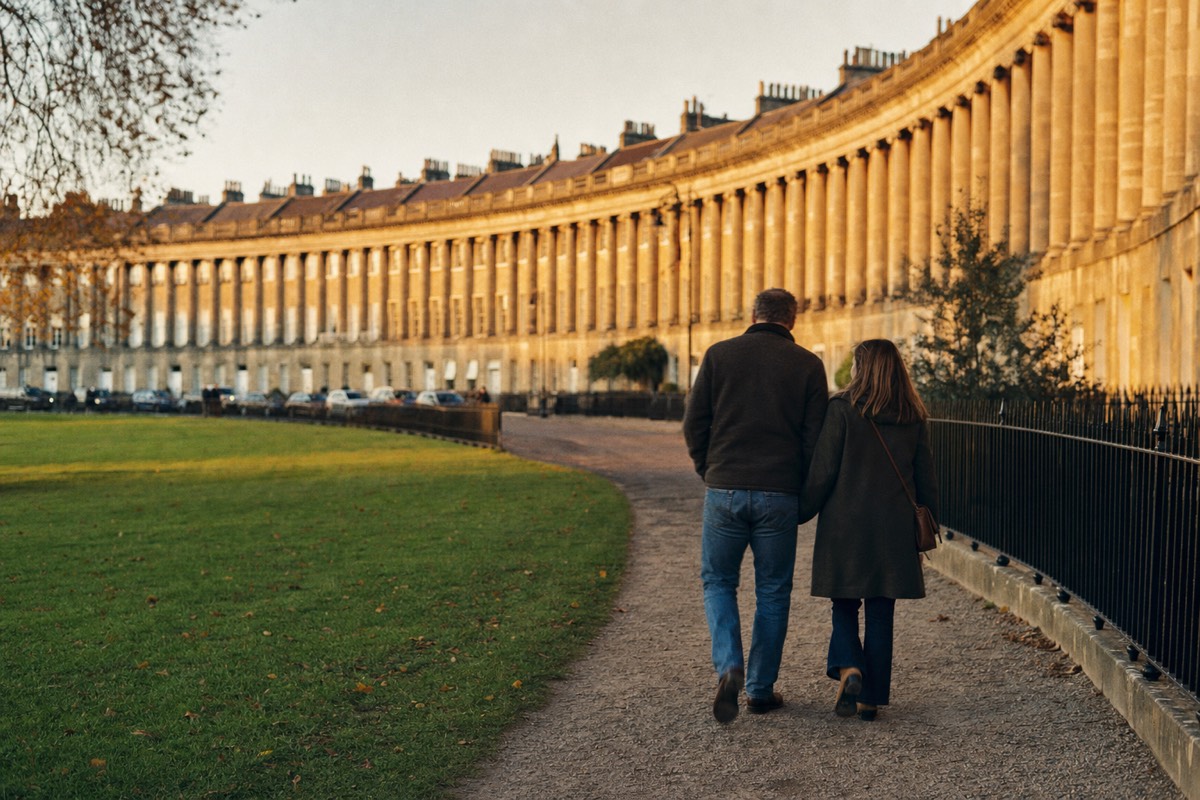
Walk on up to Bennett Street and you reach the Assembly Rooms, the beating heart of Regency social life. This is where the season happened: dancing, cards, tea, the whole marriage market that Austen skewered so precisely. Stand in the ballroom and it is easy to picture Catherine Morland in Northanger Abbey, new to town, dazzled and out of her depth. The building has had a hard life, badly damaged in the Second World War and restored since, and access can vary while conservation work goes on, so it is worth checking what is open when you visit.
Persuasion is the Bath book I love most, partly because Austen is honest about the place. Anne Elliot does not much want to be here. The city is where reputations are polished and feelings get buried under politeness. When Anne and Captain Wentworth finally speak plainly, they do it on a Bath street, and the setting matters: all that decorum, cracked open at last.
Northanger Abbey is the younger, funnier cousin. Catherine arrives thrilled by everything, gets swept up in the balls and the gossip, and slowly learns to tell real friends from flatterers. If you want to trace her, the upper town around the Circus and the Royal Crescent is the place to wander. And at the Crescent's corner, No.1 Royal Crescent is now a museum furnished as it would have looked between 1776 and 1796, which is as close as you can get to walking into one of her drawing rooms. These same Regency streets fill the Bridgerton series, and a guided filming-locations walk covers the Bath that Austen knew, a separate booking from the featured London day tour, so you can check the tour and its route here.
| Novel | Heroine | Her Bath |
|---|---|---|
| Northanger Abbey | Catherine Morland | New to town, dazzled by the balls and the gossip |
| Persuasion | Anne Elliot | A reluctant return; polish on the surface, feeling buried underneath |
When should you go, and can you do it in a day from London?
Go in September if you want the Jane Austen Festival, when thousands of costumed visitors join the Grand Regency Promenade; go off-season for the quiet, melancholy Bath of Persuasion. Either way it works as a day trip, because direct trains from Paddington take about 1 hour 20 minutes.
If you can time it, the Jane Austen Festival runs each September and turns the whole thing up to full volume. There is a famous costumed promenade, hundreds of people in Regency dress walking through the city, plus talks, dancing and events across the week. Exact dates shift year to year, so check the current programme on the official Bath tourism site, but early autumn is a lovely time to be in Bath anyway, with thinner crowds than high summer.
I went outside festival season and did not regret it. A quiet weekday morning, mist still sitting in the river valley, gives you the melancholy, inward Bath of Persuasion rather than the party. Both are true to her.
| Planning the day | The practical bit |
|---|---|
| Fastest direct train | London Paddington to Bath Spa in 1 hour 19 minutes |
| Weekday frequency | Around 72 Paddington to Bath trains on an average weekday |
| Station to the Georgian core | About a five-minute walk |
| Festival timing | Each September; exact dates shift, so check the programme |
| Quietest literary mood | An off-season weekday morning, mist still in the valley |
You can absolutely do Austen's Bath in a single day from London. The train from Paddington runs direct to Bath Spa in around an hour and twenty minutes, and the station sits a five-minute walk from the centre, so you are among the Georgian terraces almost as soon as you step off. Pair the Jane Austen Centre with a slow loop up to the Circus, the Royal Crescent and the Assembly Rooms, and you have a full, satisfying day on foot.
If you would rather not time the trains or think about tickets, a guided day tour to Bath from London handles the travel and the route for you, which leaves more of your attention for the streets themselves. For a broader plan of the city beyond Austen, my one day in Bath guide maps out how to fit the Roman Baths and the Abbey around a literary wander, and if you love the Georgian architecture as much as the books, the walking Georgian Bath post goes deeper on the stone itself.
Bath did not make Austen happy, exactly. But it sharpened her eye, and it gave English literature two of its most knowing novels. Walk it with either one in your pocket and you will understand her better than any museum could manage.
Plan your next step
Jane Austen’s Bath & history trail
Have a travel date in mind? Trace Austen’s Bath and the city behind her novels with a guide. Check your date before arranging the rest of your day.
About 2½ hours; select the English tour. Meet at the listing’s No. 17 meeting point. Museum admission and the Austen Centre’s internal tour are extra.
Start with this option, or compare the choices below.
Choose a date to see the published schedule.
Compare the options for your Bath plans
| Experience | Why choose it | Allow | What to account for |
|---|---|---|---|
| Jane Austen’s Bath & history trail | Trace Austen’s Bath and the city behind her novels with a guide. | 2.5 hours | About 2½ hours; select the English tour. Meet at the listing’s No. 17 meeting point. Museum admission and the Austen Centre’s internal tour are extra. |
| Private Austen-inspired Bath walk | Shape a private literary walk around the Austen stories and streets that interest you. | 2 hours | About 1½–2 hours, starting at Bath Abbey. Guide included; transport and museum entry extra. A costumed guide is not guaranteed. Published schedule pricing starts at two adults. |
| Jane Austen Centre admission | Explore Austen’s Bath through the exhibition, costumes and introductory presentation. | 1.5 hours | Admission in Bath; allow around 1–1½ hours as a planning estimate. Upper levels have stairs and no lift. Afternoon tea is a separate choice. |
| Afternoon tea at the Regency Tea Room | Make time for sandwiches, cakes, a warm scone and tea in an Austen-inspired setting. | 1 hours | One hour at 40 Gay Street, Bath. This is the Regency Tea Room, not the Pump Room or Sally Lunn’s; check dietary arrangements before booking. |