Prior Park and the Palladian Bridge: The Best View of Bath Is a Walk Uphill
A first-person walk out to Prior Park, over the Palladian Bridge and the lake, with the whole of honey-stone Bath laid out below. National Trust, and no car park.
 By James Thornton, London to Bath day tour guide & heritage specialist
Most people do Bath at river level and never look up at the hills around it. That's a mistake, and Prior Park is the reason. It's a steep climb out of the centre, and at the top you get the postcard the postcards don't show: the entire honey-coloured city spread out below you, framed by an actual Palladian bridge.
I nearly skipped it because it's a slog to reach, and I'm glad I didn't. Here's how the walk went and what to know before you set off.
How do you get to Prior Park if there's no parking?
You walk or take a bus, because the National Trust keeps cars out and there is no visitor parking at all. On foot it is a steady uphill haul of twenty-odd minutes from the city centre, on pavements and lanes that turn greener as you climb. Do not drive there hoping for a space.
Here's the thing that trips people up: there really is no visitor parking. None. The Trust deliberately keeps cars out, so you arrive on foot or by bus from the city centre.
I walked it, and it is a proper haul. Wear something you can climb in, because the garden itself is on a slope too. By the time I reached the entrance I'd earned the view, which somehow made it better.
| How you arrive | What to expect |
|---|---|
| On foot | 20 to 25 minutes of steady uphill from the centre, greener with every street |
| By bus | Gets you most of the way up; the kind option for tired legs |
| By car | No visitor parking at all, so don't |
What is the Palladian Bridge actually like?
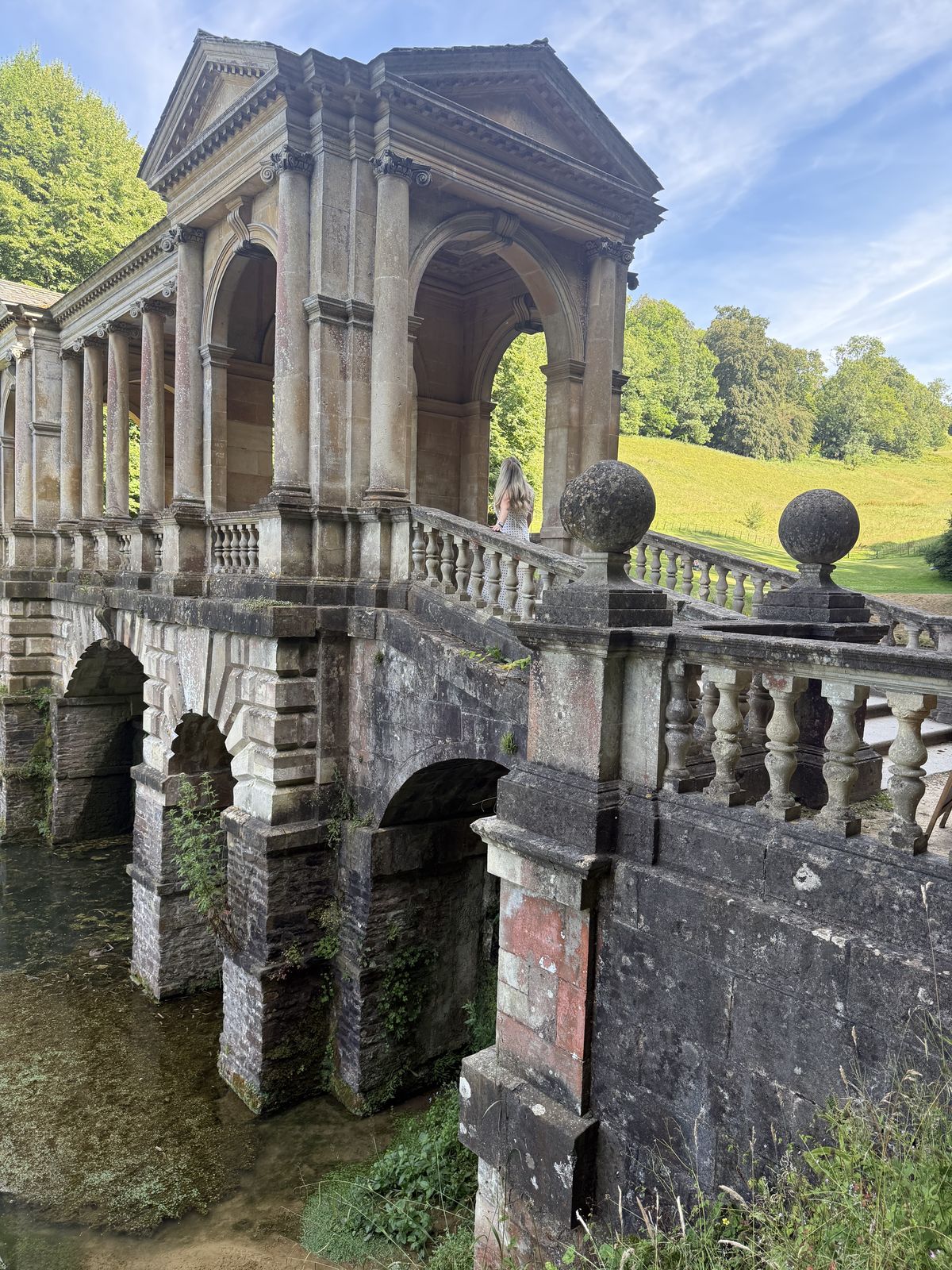
It is a covered stone bridge with columns and a pitched roof, crossing the lake at the bottom of the valley, and one of only four bridges of this Palladian design in the world. You can walk straight across it, footsteps echoing under the roof, exactly as visitors have since the 18th century.
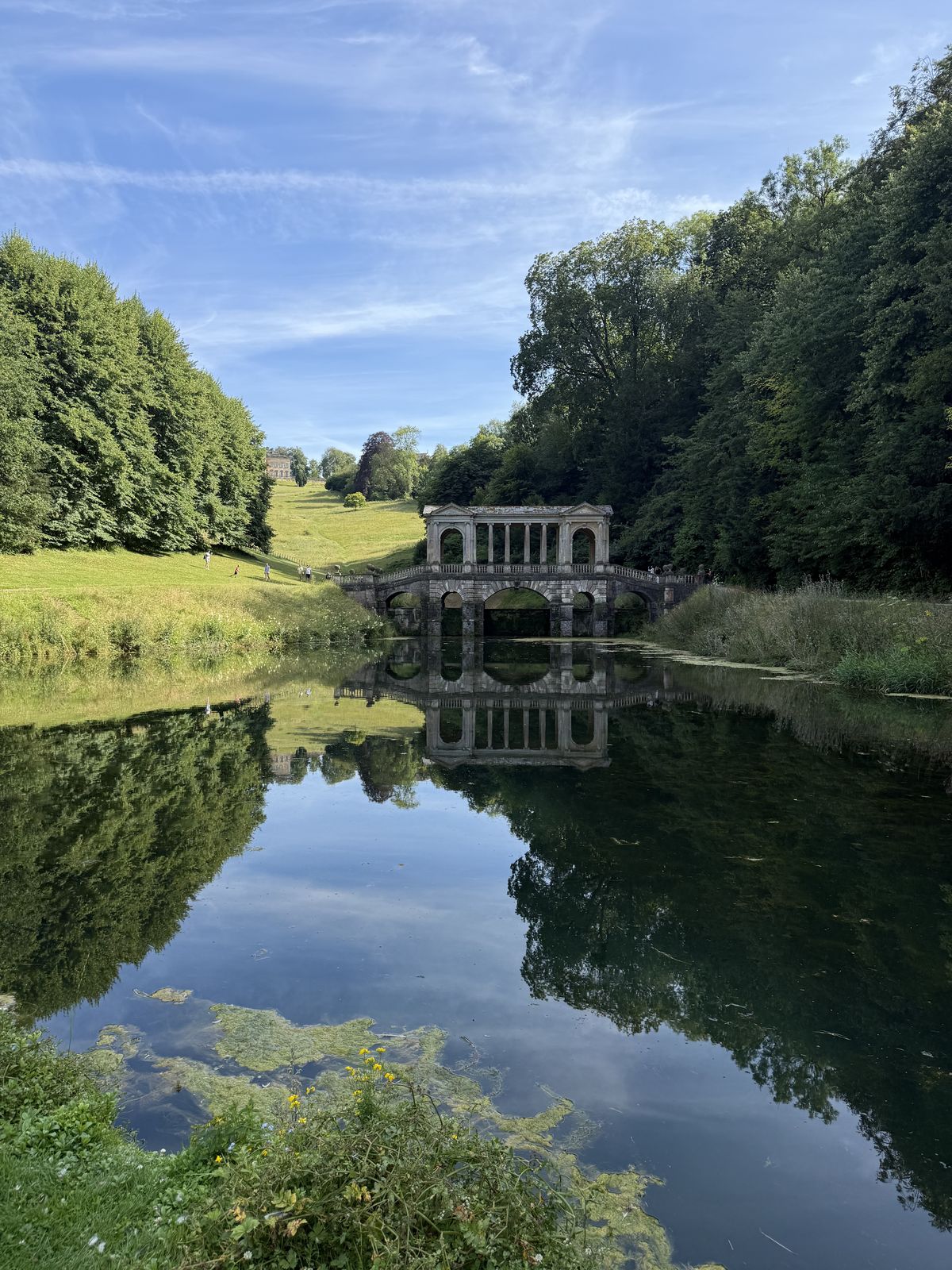
You come in near the top of the garden and walk down, which means the reveal happens gradually. The valley opens up, the lake sits in the bottom of it, and there, crossing the water, is the bridge: the kind of thing that looks like it was airlifted in from a painting.
It belongs to an 18th-century landscape shaped with input from the poet Alexander Pope and the great landscape designer Capability Brown. It's not a ruin or a museum piece: you walk across it and out the other side.
How good is the view back over Bath?
It is the best panorama Bath has: the whole honey-stone city spread below, the Abbey rising from the middle, wooded hills wrapping the far side. The garden was landscaped in the 18th century, with advice from Alexander Pope and Capability Brown, precisely to frame that picture, and it still works.
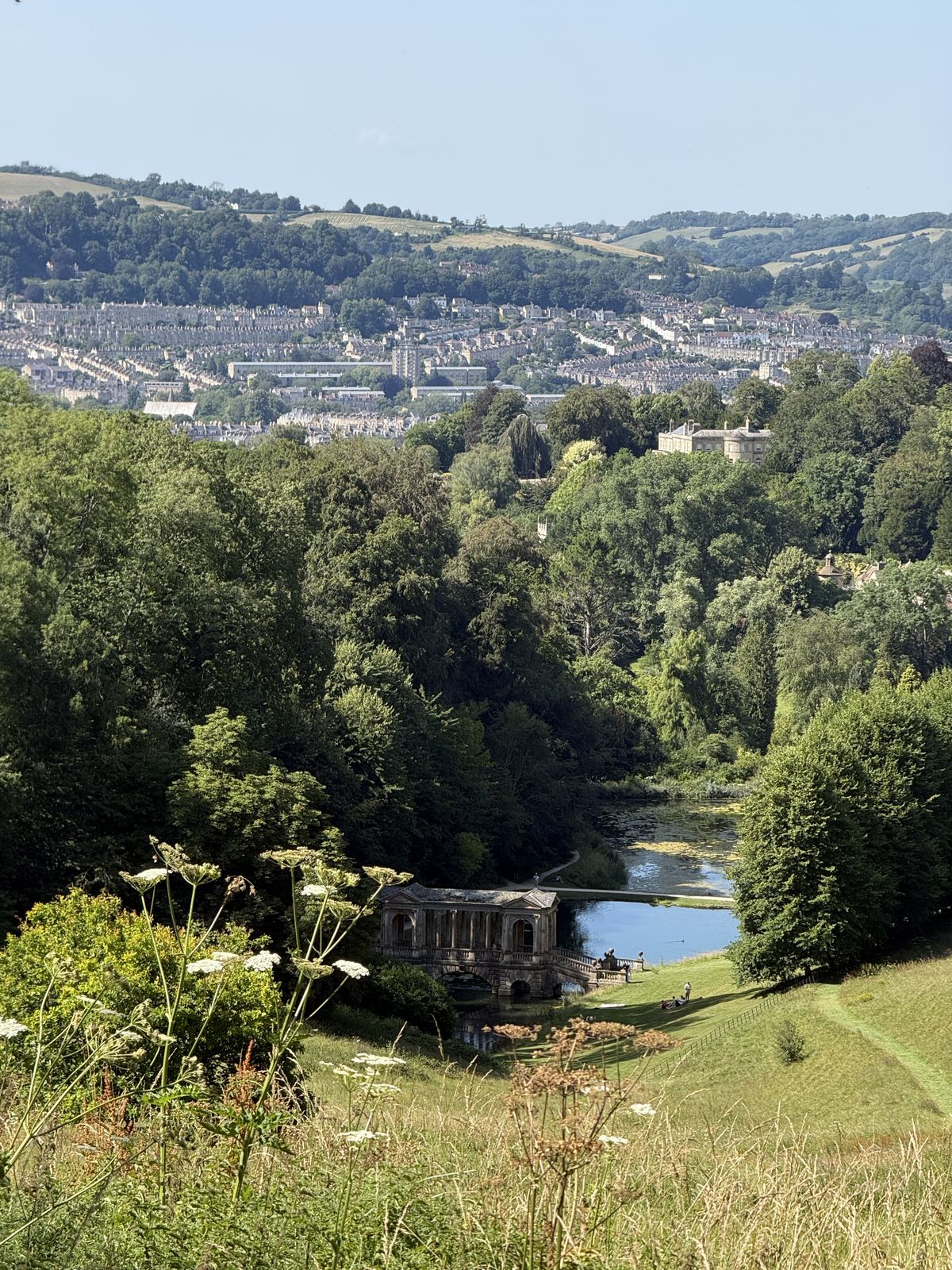
Turn around on or near the bridge and you get the reason to make the climb. It works exactly as intended two and a half centuries later.
I sat on the grass above the lake and just took it in for a while. There's a real quiet up here compared to the crush around the Roman Baths, and on the day I went there were maybe a dozen other people in the whole garden. Bring a coffee and make an hour of it.
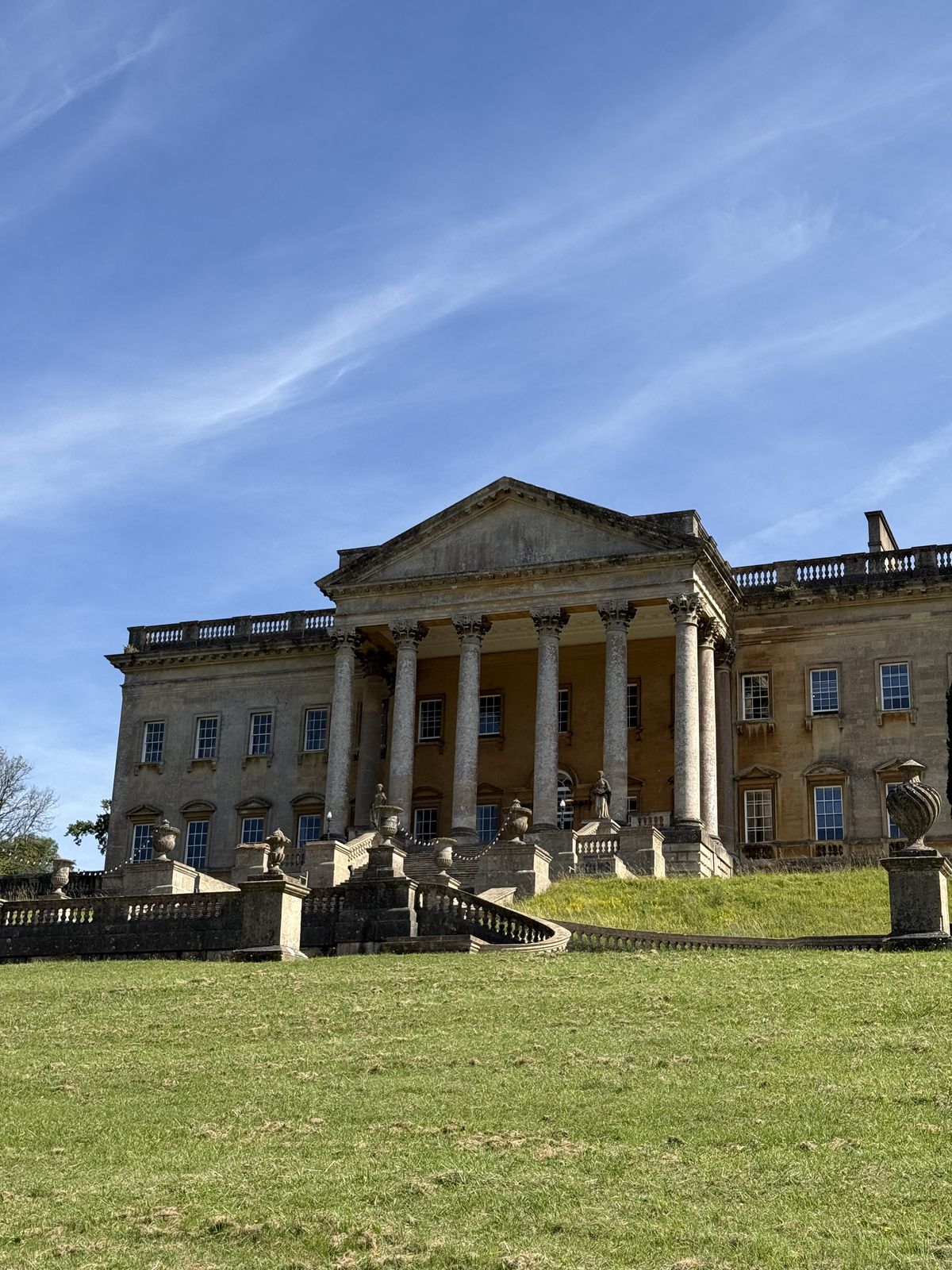
What surprised me was how the view keeps changing as you move around. From up by the entrance you get the wide panorama with the bridge small in the foreground. Walk down to the lake and the bridge fills your view instead, mansion on the hill behind it, city out of frame. There isn't one single "correct" spot, which is part of the fun: the whole thing was landscaped to be walked through, with the picture rearranging itself at every turn.
What should you know before you climb?
It is a National Trust landscape garden, so non-members pay an entry fee, paths are grass and gravel on a real slope, and there is not much of a café. Wear shoes that grip, take water, check the opening hours before you climb, and save it for a clear day: the view is the point.
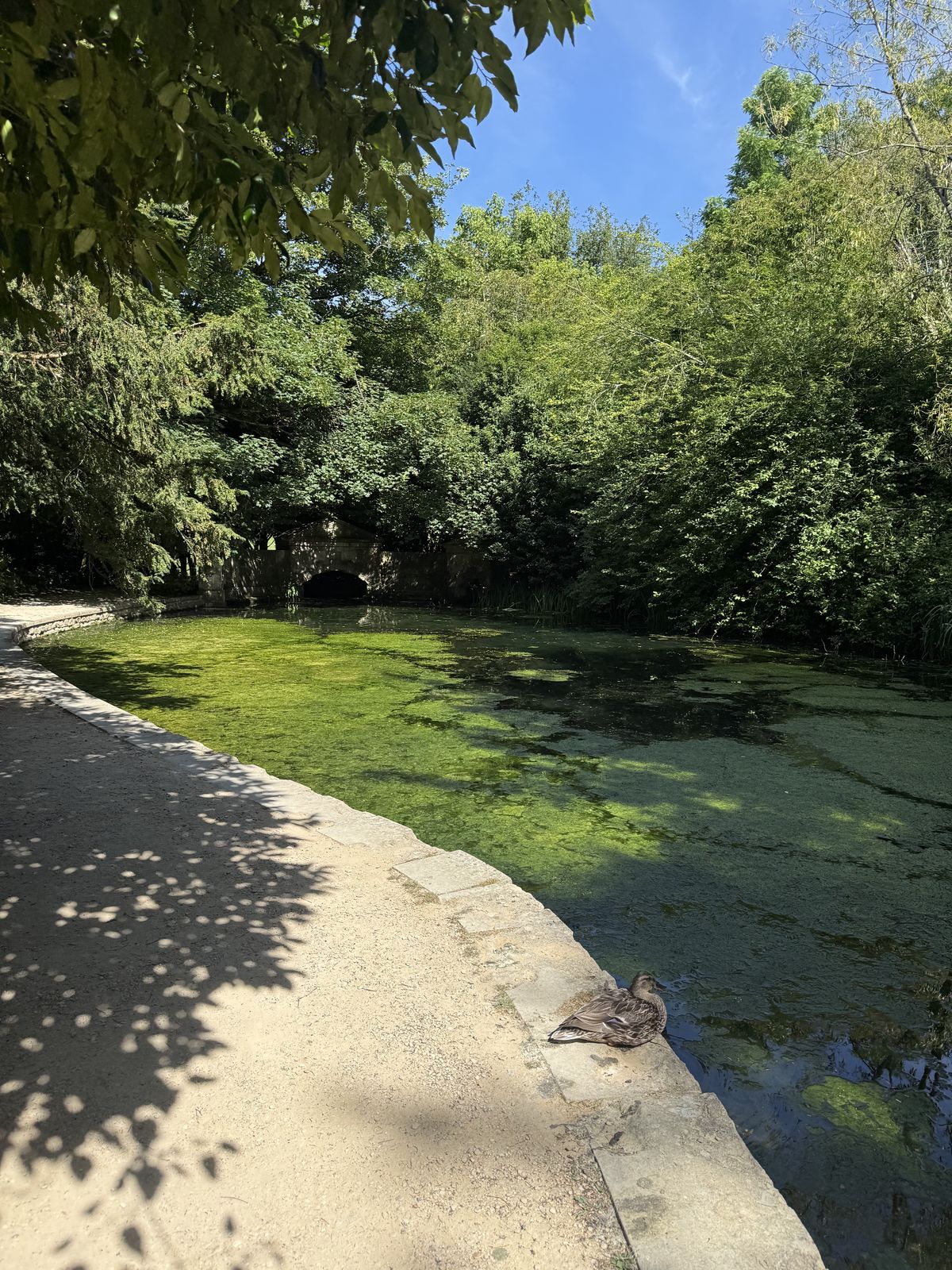
It's a garden of landscape rather than flowerbeds, so it's about the shape of the valley rather than horticulture. Paths can get muddy after rain, and the hours shift with the seasons, so check the current National Trust listing for Prior Park rather than trusting an old figure.
And go on a bright day if you can, because the entire point is the view back over Bath, and in low cloud the city vanishes into grey and you've done the climb for nothing. I got lucky with clear skies. If your one free day looks wet, save Prior Park and spend it indoors at the Roman Baths instead.
| Before you go | The reality |
|---|---|
| Entry | National Trust site, fee for non-members |
| Terrain | Grass and gravel paths on a slope, muddy after rain |
| Food and drink | Not much up there, so carry water |
| Opening hours | Seasonal, so check the current National Trust listing |
| Weather call | Clear day essential: in low cloud the view disappears |
How do you fit Prior Park into a day trip from London?
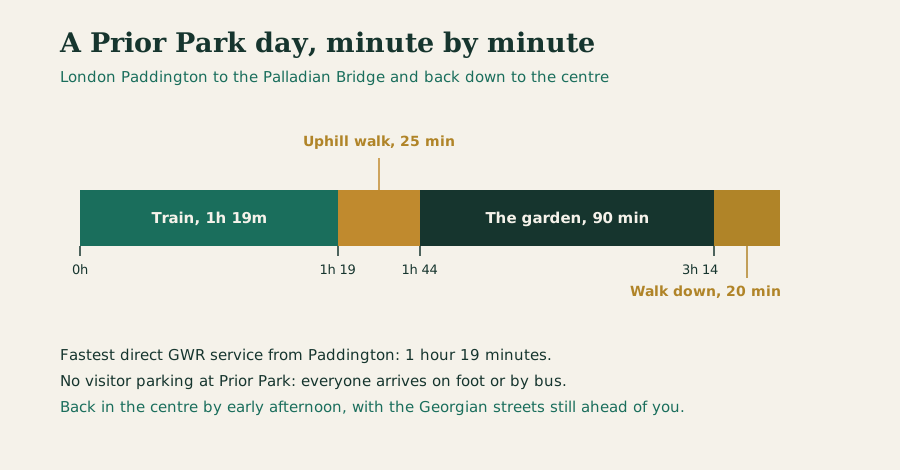
Give Prior Park a full-day visit rather than a rushed few hours, because the walk out and back eats time. The fastest direct GWR train from London Paddington reaches Bath in 1 hour 19 minutes, so an early start leaves room for the climb, the garden and the Georgian centre afterwards.
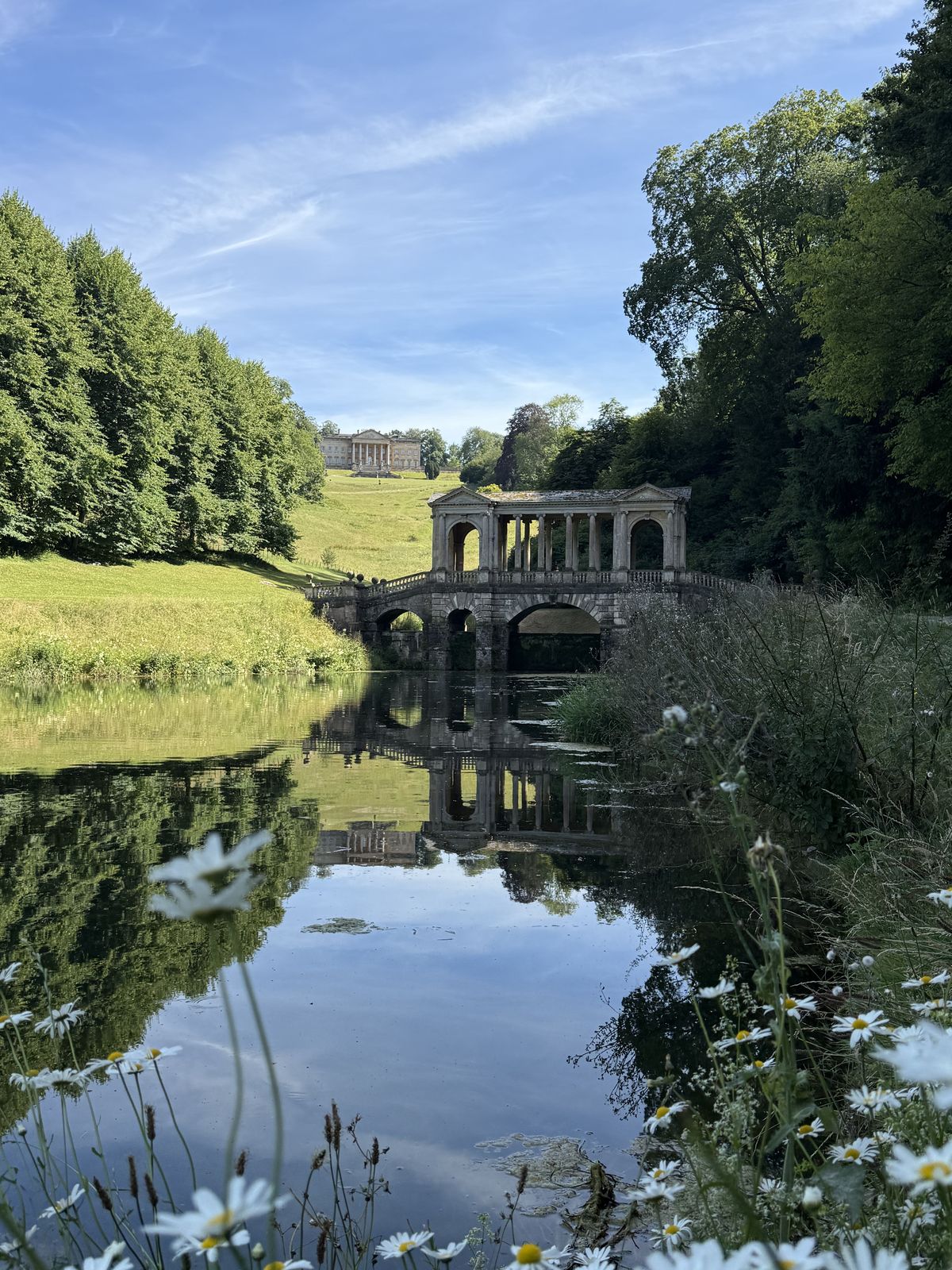
Prior Park is the kind of thing you add when you've got a full day rather than a rushed few hours. If you're coming down from London, GWR's direct train makes an early start workable, and I've laid out the timings in the how far is Bath from London guide if you're planning tightly.
Here's how the clock runs on a tight but comfortable day:
| Leg of the day | Time it takes |
|---|---|
| London Paddington to Bath Spa, fastest direct train | 1 hour 19 minutes |
| Walk up from the centre to Prior Park | 20 to 25 minutes |
| The garden itself | About an hour and a half |
| Walk back down to the centre | About 20 minutes |
| What's left | Most of the afternoon for the Georgian streets |
If you'd rather not spend the morning on train logistics and just want the day sorted, a guided day tour from London takes the travel off your plate, though a hillside garden like this is best on an independent visit when you can linger as long as you like. Pair it with a walk down into the Georgian centre and you've balanced the grand set-pieces with something greener and calmer. Either way, don't leave Bath without at least one look at it from above.
Plan your next step
Bath hop-on hop-off bus
Have a travel date in mind? Use the City and Skyline routes to connect Bath’s centre with its hillside stops. Check your date before arranging the rest of your day.
24- or 48-hour ticket options; each complete circuit takes about 50 minutes. English commentary. Board at a route stop; attraction entry is extra.
Start with this option, or compare the choices below.
Choose a date to see the published schedule.
Compare the options for your Bath plans
| Experience | Why choose it | Allow | What to account for |
|---|---|---|---|
| Bath hop-on hop-off bus | Use the City and Skyline routes to connect Bath’s centre with its hillside stops. | 0.833333 hours | 24- or 48-hour ticket options; each complete circuit takes about 50 minutes. English commentary. Board at a route stop; attraction entry is extra. |