Inside the Roman Baths, Bath: What It's Actually Like to Visit
A first-person walk through the Roman Baths in Bath, from the terrace over the Great Bath to the Gorgon pediment, the hypocaust, the audio guide and the tips I wish I'd known.
 By James Thornton, London to Bath day tour guide & heritage specialist
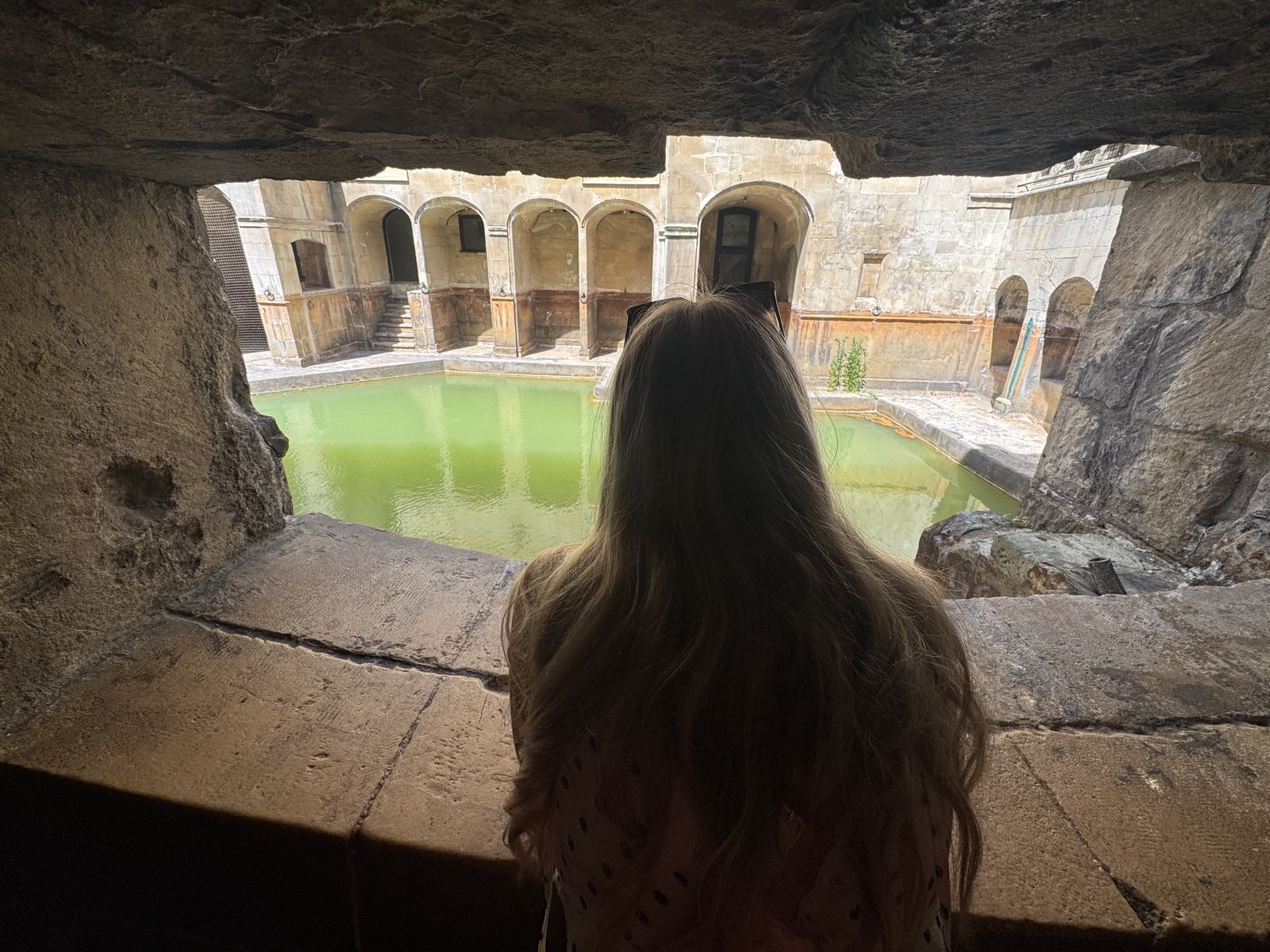
Steam was rising off the water before I'd even worked out where to look. You come out onto the terrace above the Great Bath, and the whole thing is just there below you: flat green water, statues staring out over the top of the columns, and this faint warmth in the air on a cool morning. I'd seen the photos. I still stopped walking.
I did Bath as a day trip and gave the Roman Baths the biggest slice of my afternoon, which turned out to be the right call. Here is how the visit actually went, room by room, plus the couple of things I'd do differently.
How do you get into the Roman Baths without queueing?
Book a timed entry ticket before you travel and take the earliest slot you can face. The Roman Baths run on timed entry, and mid-morning and early-afternoon slots sell out first in summer. Walk in at opening and you get the terrace nearly to yourself; turn up at lunchtime and you queue out of the door.
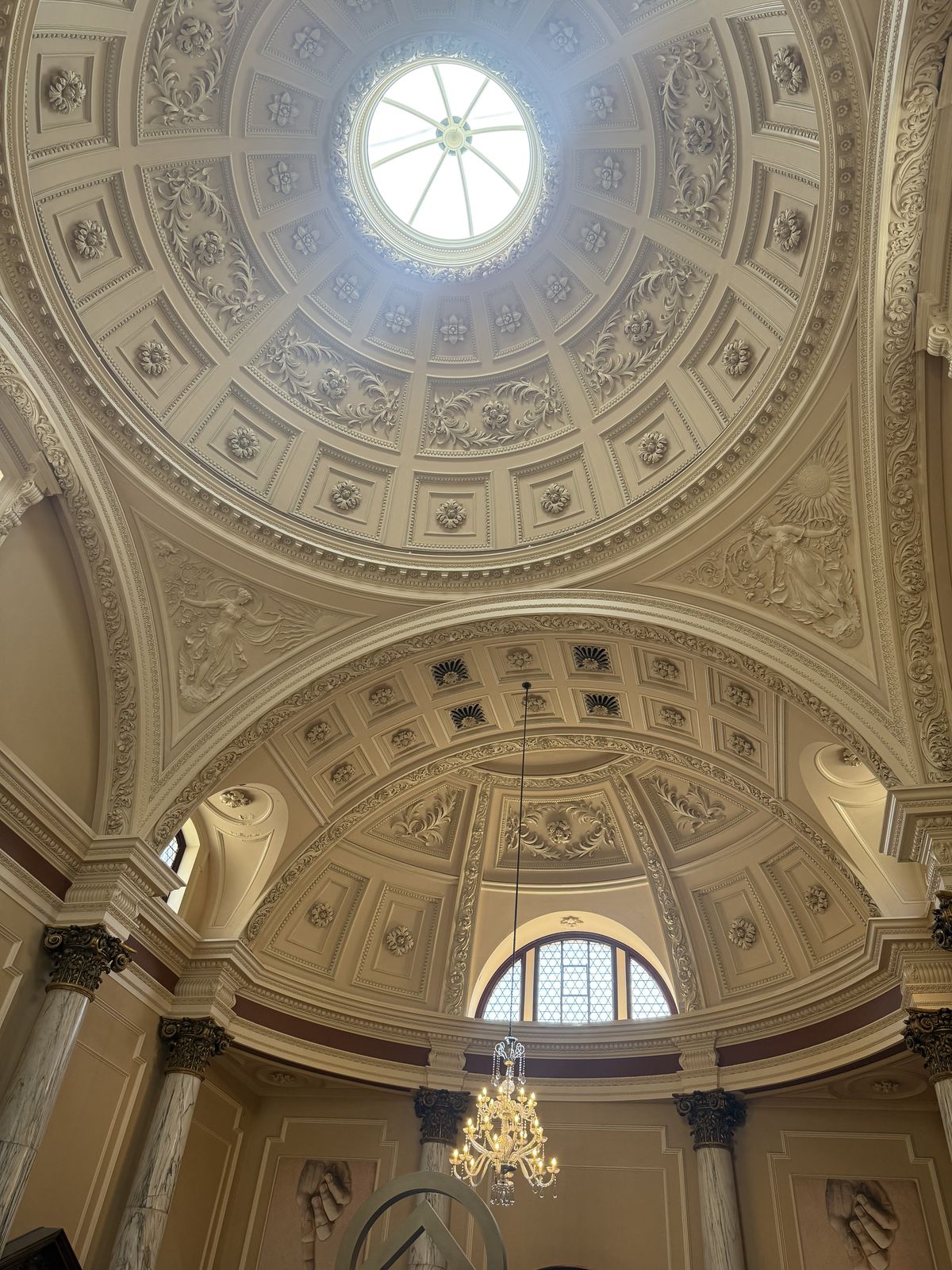
The entrance is right next to Bath Abbey, a five-minute stroll from Bath Spa station, so it's genuinely easy to find. What I got wrong was timing. I turned up around one o'clock on a summer Saturday and there was a queue snaking out of the door, and inside it stayed shoulder-to-shoulder for the first twenty minutes.
You can reserve a timed Roman Baths entry ticket (it includes the audio guide) or check the official Roman Baths website for the current price. Either way, grab the earliest slot you're willing to get up for. If you can walk in at opening, the light is better for photos anyway.
Here's roughly how the day flowed on my visit:
| Time of day | What it was like |
|---|---|
| Opening slot | Terrace nearly empty, soft light, easy photos |
| Mid-morning | Filling fast; these slots sell out first in summer |
| Roughly 12pm to 2pm | Queue out of the door, shoulder-to-shoulder inside |
| Late afternoon | Crowds thin again, warmer light on the water |
If you'd rather not stitch together train times and a ticket window on the same morning, a guided day tour from London handles the travel and drops you into the city with the day already planned. I did it independently and it was fine, but I spent a chunk of the morning staring at a departures board.
What is the Great Bath actually like up close?
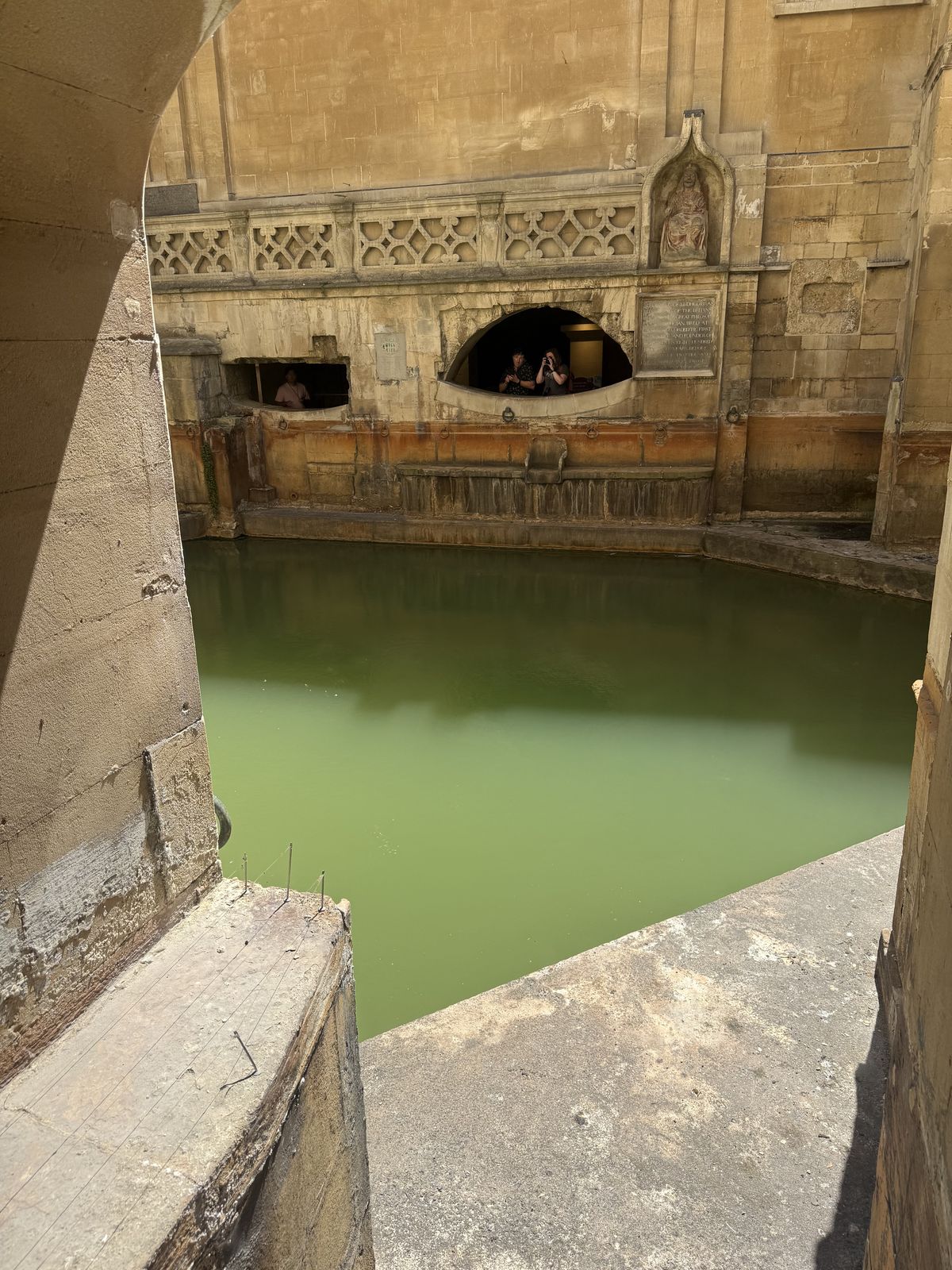
Up close, the Great Bath is flat green water steaming gently under open sky, ringed by Roman paving and Victorian statues. The green is algae, grown because the roof is long gone. You cannot touch or enter the water, which rises from Britain's only naturally hot spring at around 45 to 46C, untreated.
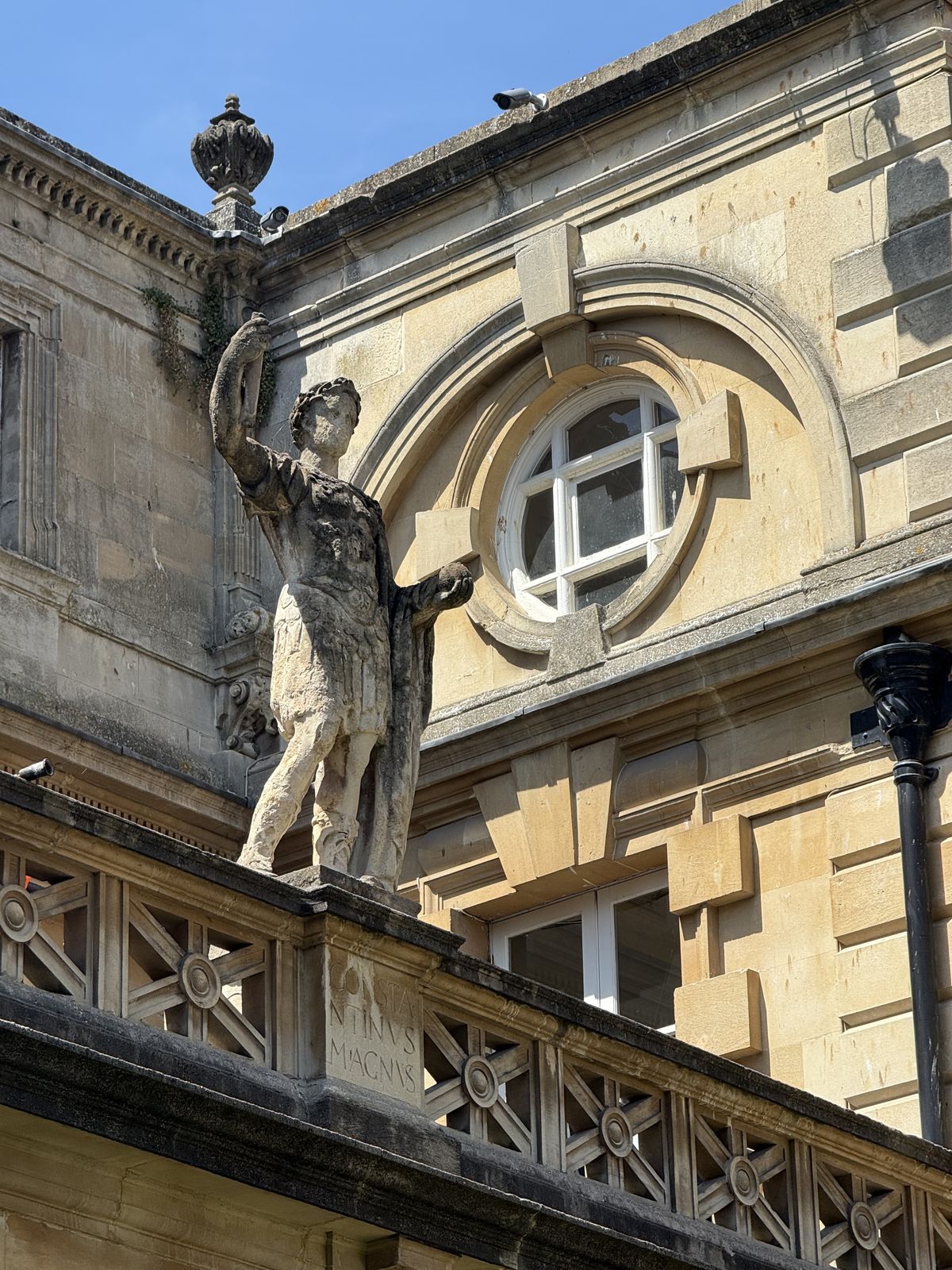
You start high, up on the Victorian terrace with those weathered statues of Roman emperors and governors looking down. It's a good place to get your bearings before the crowd swallows you. Then the route spirals you down and down, and the temperature climbs as you go, until you're standing right at the edge of the Great Bath itself.
The green water had half-worried me in photos, like it might feel like neglect. It doesn't. In Roman times this pool was roofed and ran clear; open to the sky, sunlight grows algae in it, and that's the whole story. There's a real pleasure in just walking the paving around the edge, trailing your hand along the wall, watching the steam lift.
The numbers behind that steam are startling:
| The spring | The figure |
|---|---|
| Thermal water rising daily | Over one million litres |
| Temperature at the spring | Around 45 to 46C |
| Bathing in the Great Bath | Not allowed; the water is untreated |
| Where you can bathe instead | Thermae Bath Spa, pools at about 33.5 to 34C |
What should you not miss in the museum?
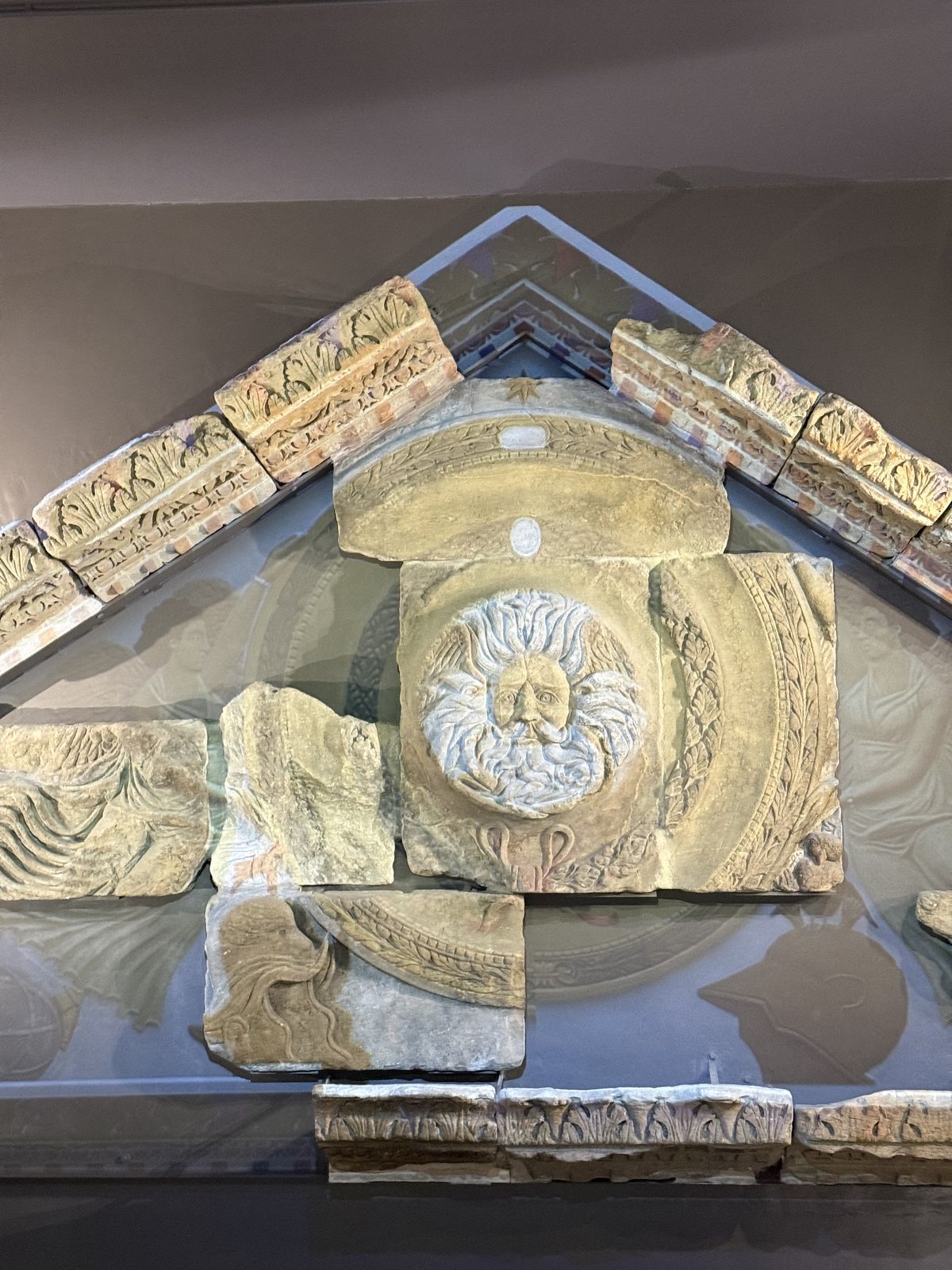
Two things: the carved Gorgon's head from the Temple pediment, all snakes and glare, and the gilded bronze head of Sulis Minerva, the goddess the baths were dedicated to. Add the lead curse tablets that bathers threw into the spring, and the museum easily justifies half your visit.
Here's the part people rush and shouldn't. The museum wraps around the baths, and it holds the pieces that actually make the place matter.
First, the Temple pediment, reassembled on a wall with the missing bits sketched in. At the centre is that famous carved face, all snakes and glare and a moustache like a river in flood. Standing under him you get why the Romans built a temple here. It's a genuinely strange, powerful bit of carving.
A few rooms on is the gilded bronze head of Sulis Minerva herself. It's small, it's behind glass, and it stops most people dead. The Romans fused their Minerva with the local goddess Sulis, which is why the spring was sacred long before the baths were grand. There are also the "curses," little lead tablets people threw into the water asking the goddess to smite whoever nicked their cloak at the baths. Petty, ancient, and weirdly relatable.
How did the Romans heat the baths?
With a hypocaust: stacks of squat brick pillars that held the floors up so hot air could circulate underneath, warming the rooms above. You can still see the pillars in the East Baths, along with lead-lined channels and a Roman drain that has carried the spring's overflow non-stop since the first century.
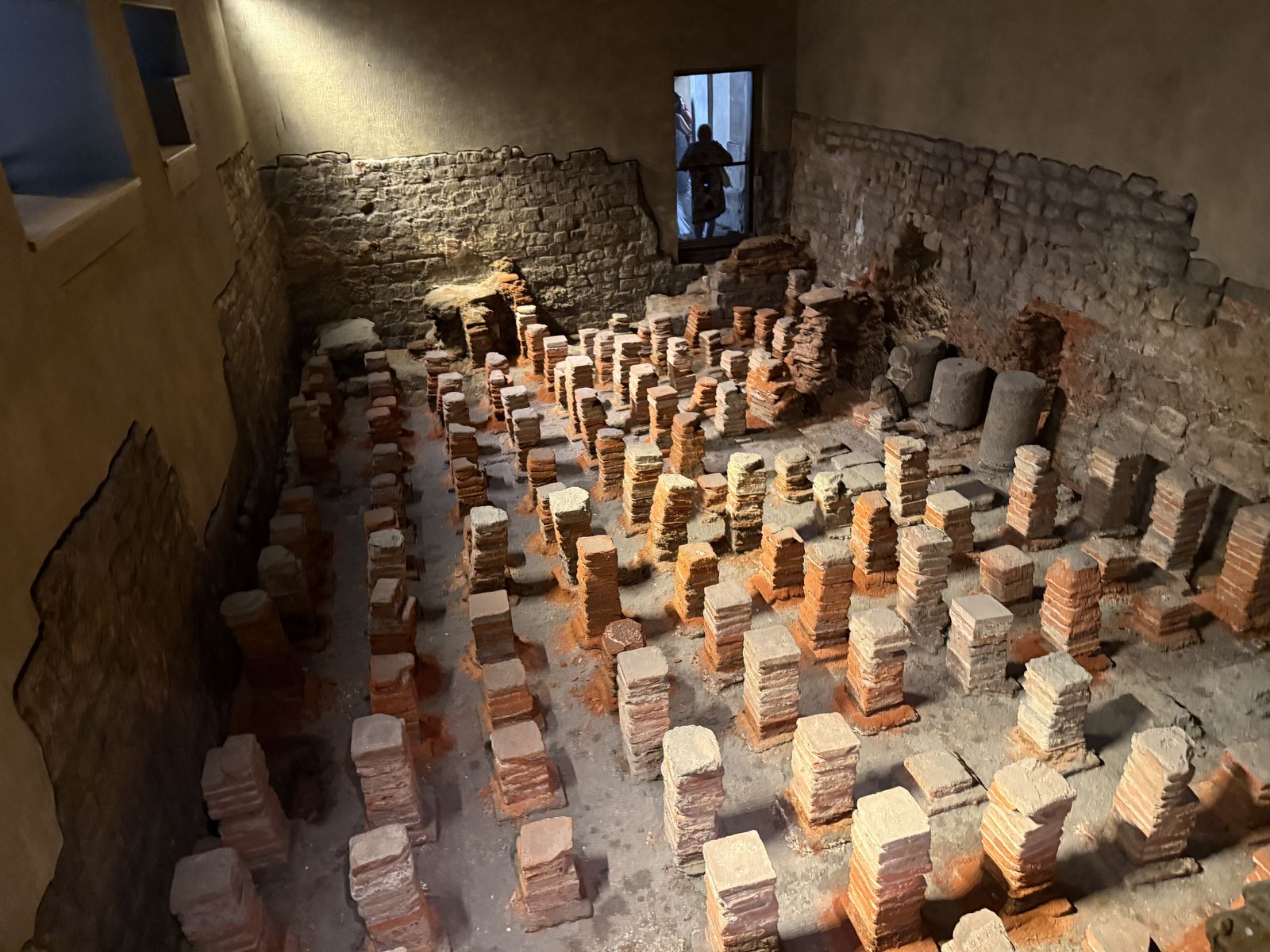
Down in the East Baths the rooms get dimmer and you start seeing the plumbing, which sounds dull and is the opposite. The hypocaust is the same idea as a heated floor in a nice hotel, done two thousand years ago.
You also see the lead-lined channels still carrying hot spring water, and the overflow where the spring dumps its excess through that first-century drain. The detail got me more than any statue. It's still working.
Is the audio guide worth taking?
Yes, take it: the audio guide is included in the ticket and it is genuinely good. There are several tracks at each stop, including a wry set voiced by the writer Bill Bryson. It also slows you down, which is the easiest way to let the crowds flow past you.
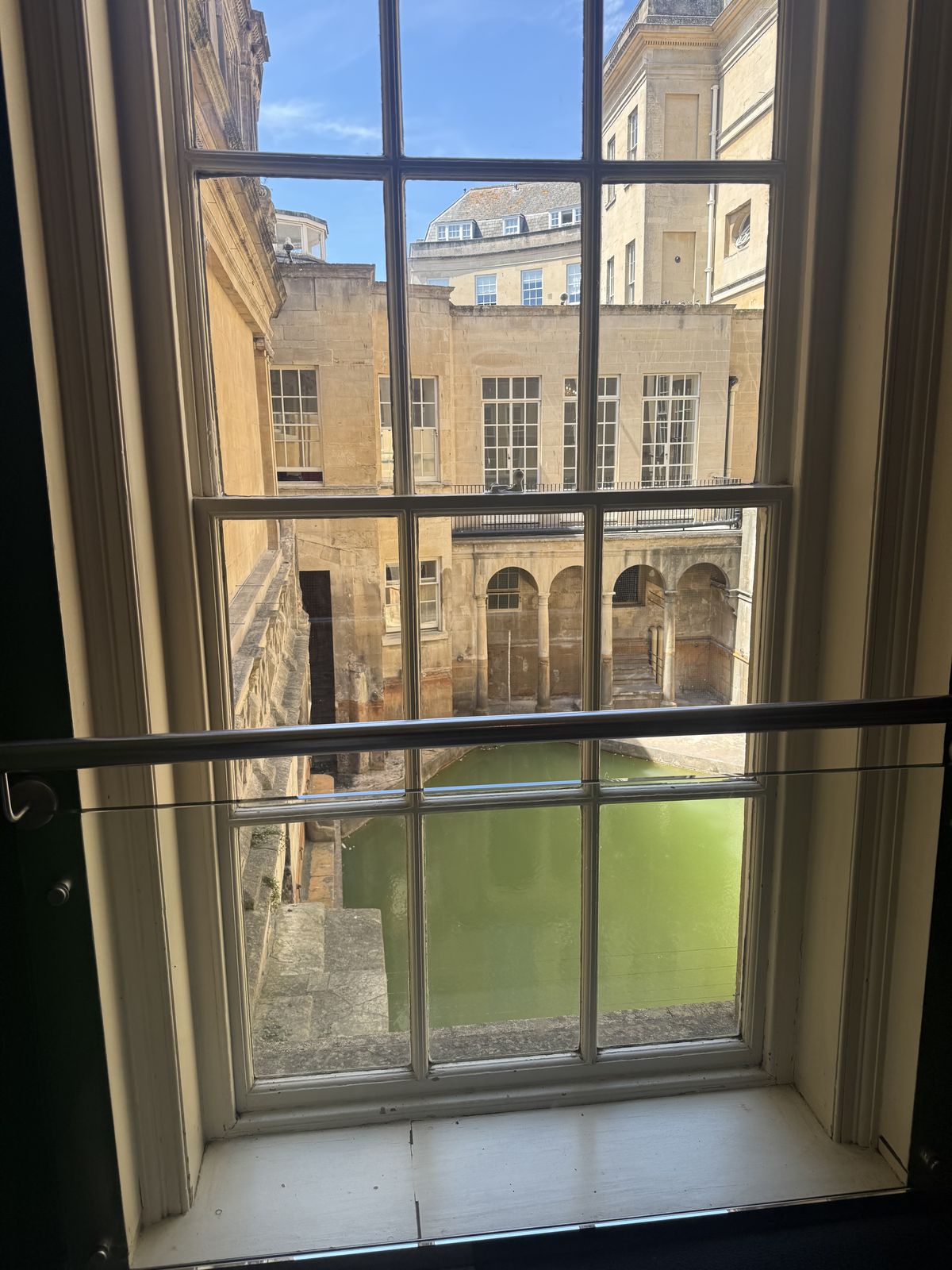
I usually skip audio guides. This one I listened to in full, partly because it lets you slow down and let a family group flow past while you linger at a window or a railing. Seek out the Bryson tracks; they're the warmest thing in the building apart from the water.
What would I tell a first-timer?
Allow ninety minutes to two hours, book the earliest or latest slot you can, and remember you cannot bathe here: the ancient site is sealed. For a soak in the same thermal water, Thermae Bath Spa sits round the corner. The museum deserves as much time as the Great Bath itself.
I gave it two hours and used all of them. If you're budgeting your time, this is roughly how mine broke down, and I wouldn't trim much:
| Part of the site | Time I'd give it |
|---|---|
| Terrace and statues | 10 to 15 minutes |
| Great Bath at water level | 25 to 30 minutes |
| Museum: pediment, Sulis Minerva, curse tablets | About 40 minutes |
| East Baths and hypocaust | About 20 minutes |
| Whole visit | Ninety minutes to two hours |

And to be clear, you do not bathe here: this is the ancient site, sealed off. If you want to actually get into the thermal water, that's Thermae Bath Spa round the corner, a modern spa fed by the same springs with a rooftop pool over the rooftops. I ran out of time for it and have been quietly annoyed ever since; I've weighed up the ticket separately in is Thermae Bath Spa worth it.
Wondering whether the whole thing is worth the ticket? My honest take is yes, and I've written up the is the Roman Baths worth it question in more detail. If you're planning the wider day, the one day in Bath guide slots the baths into everything else without leaving you sprinting between sights.
Plan your next step
City walk & Roman Baths entry
Have a travel date in mind? Pair a Blue Badge guided city walk with a self-guided visit inside the Roman Baths. Check your date before arranging the rest of your day.
About 3 hours; meet outside Bath Abbey’s main doors. Roman Baths entry and audio guide included; your guide does not lead the visit inside.
Start with this option, or compare the choices below.
Choose a date to see the published schedule.
Compare the options for your Bath plans
| Experience | Why choose it | Allow | What to account for |
|---|---|---|---|
| City walk & Roman Baths entry | Pair a Blue Badge guided city walk with a self-guided visit inside the Roman Baths. | 3 hours | About 3 hours; meet outside Bath Abbey’s main doors. Roman Baths entry and audio guide included; your guide does not lead the visit inside. |
| Roman Baths entry & audio guide | Explore the Great Bath, temple remains and museum at your own pace. | 2 hours | Timed admission in Bath with an audio guide. Allow 1½–2 hours as a planning estimate; no bathing or London transport. |