Unusual Things to Do in Bath: Hidden Lanes, Viewpoints and Quiet Corners
A first-person guide to hidden Bath beyond the Roman Baths and Royal Crescent: Prior Park, the Alexandra Park viewpoint, the skyline walk, Bathwick and quirky corners.
 By James Thornton, London to Bath day tour guide & heritage specialist
Everyone photographs the Royal Crescent from the front lawn. Almost nobody climbs the hill behind it, turns around, and sees the whole city fall away beneath them with the crescent as one small pale curve in a much bigger picture. That gap, between the sight everyone queues for and the view five minutes' walk above it, is where the best of Bath hides.
I did the headline stuff on my first visit and loved it. The second time I went looking for the quiet version, and it turned out to be the one I keep thinking about. Bath is tiny and steep, which means the moment you climb out of the tourist core the crowds thin to almost nothing and the city opens up.
Where can you see the whole of Bath without the crowds?
Climb to Alexandra Park, a short, steep walk south of the station, for the classic panorama of the Abbey, terraces and hills, then, if you have a few hours, join a stretch of the Bath Skyline walk. Most day-trippers never leave the flat streets, so both stay quiet.
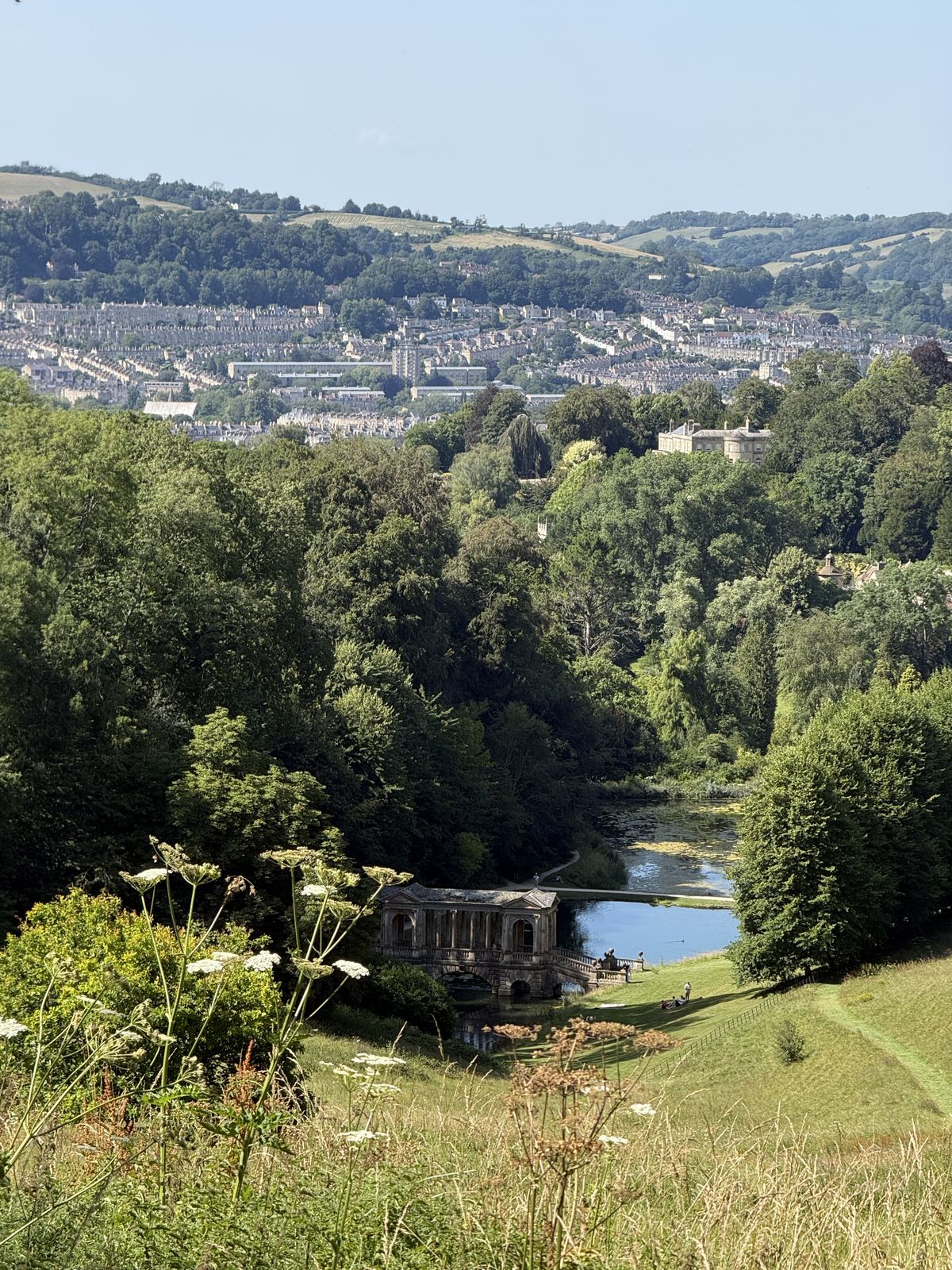
Start with the view, because it reframes everything. Alexandra Park sits on a hill on the south side of the city, a stiff but short walk up from the station area, and the payoff is the classic postcard panorama of Bath laid out below: the Abbey tower, the sweep of terraces, the green hills wrapped around it all. Hardly anyone doing a day trip bothers, because it means walking uphill away from the sights. That is exactly why it is worth doing. Go early or late and you may have the whole thing to yourself.
If you have decent shoes and a few spare hours, the Bath Skyline is a signposted walk that loops around the hills above the city through meadows and woodland, with viewpoints down over the rooftops the whole way. It is a proper green escape hiding in plain sight above a busy little city. You do not have to do the full loop either. Even walking a section up from Bathwick and back gives you that sense of Bath as a bowl of stone sitting in the countryside, which you never get from the streets; the official tourism site keeps route details and what's-open information current.
Here is how the quiet options stack up against each other.
| Quiet spot | The climb | Time it takes | Crowds |
|---|---|---|---|
| Alexandra Park | Stiff but short, from the station side | Under an hour up and back | Often nobody at all |
| Prior Park | An uphill walk or a bus from the centre | Half a day done properly | Light, by design |
| Bath Skyline walk | Rolling grass and woodland paths | A few hours for a good stretch | Walkers only |
| Bathwick and Widcombe | Flat, over Pulteney Bridge | An easy hour or two | The tour groups stay west |
| Ghost walk | None; the guide leads | About two hours, after dark | Small evening groups |
Is Prior Park really worth the climb?
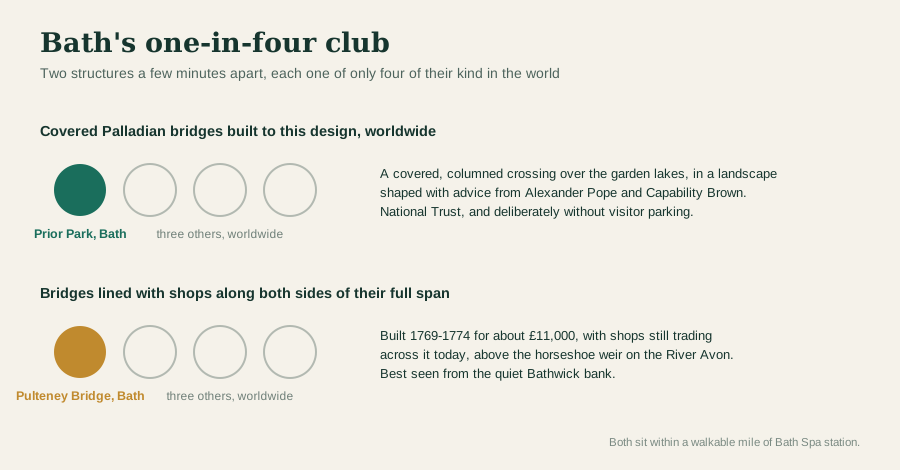
Yes. Prior Park's covered Palladian Bridge is one of only four of its design anywhere in the world, the garden was shaped with advice from Alexander Pope and Capability Brown, and because the National Trust provides no visitor parking, the crowds simply never arrive. You come on foot or by bus.
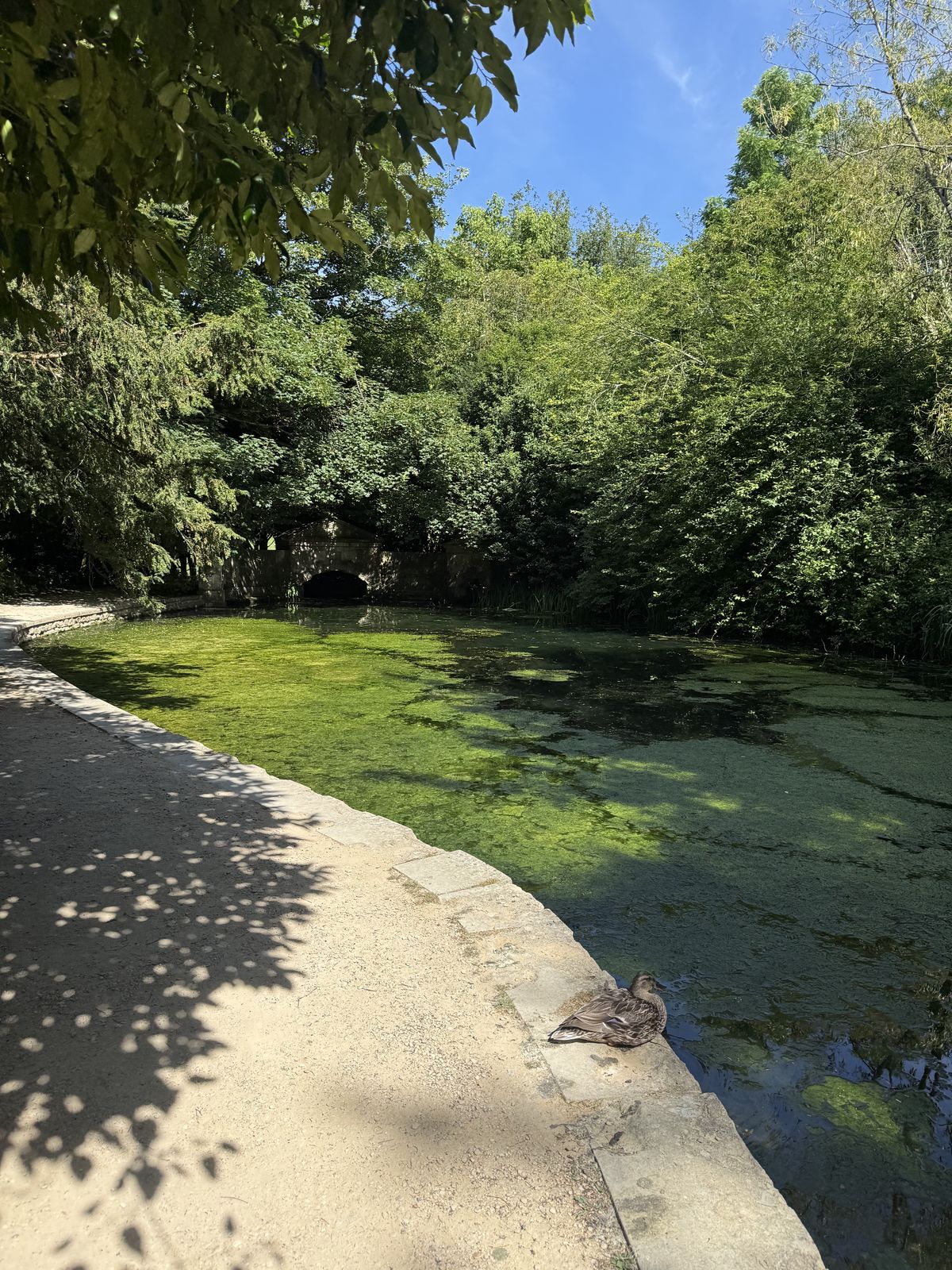
The one genuinely famous hidden gem is Prior Park, a National Trust landscape garden on the slopes above the city. Its Palladian Bridge, a covered, columned crossing over a lake, is one of only a handful like it in the world, and framing the city through its arches is one of the loveliest views in Bath. The garden was shaped in the eighteenth century with input from Alexander Pope and Capability Brown, and it feels a world away from the busy centre.
One important practical point: there is no visitor parking, by design. You arrive on foot or by bus from the centre, which puts a lot of people off and keeps it quiet. Check the National Trust's Prior Park page for opening days and current admission before you go, because it is not open every day in every season. I have written more about it in my Prior Park and the Palladian Bridge post, but the short version is: make the effort, it is the best thing most day-trippers skip.
What is hiding on the quiet side of the river?
Cross Pulteney Bridge, one of only four bridges in the world lined with shops along both sides, and you reach Bathwick, wide Georgian streets the tour groups skip. Wander on to the Holburne Museum, look back over Pulteney Weir from the quiet bank, then drift south into village-like Widcombe.
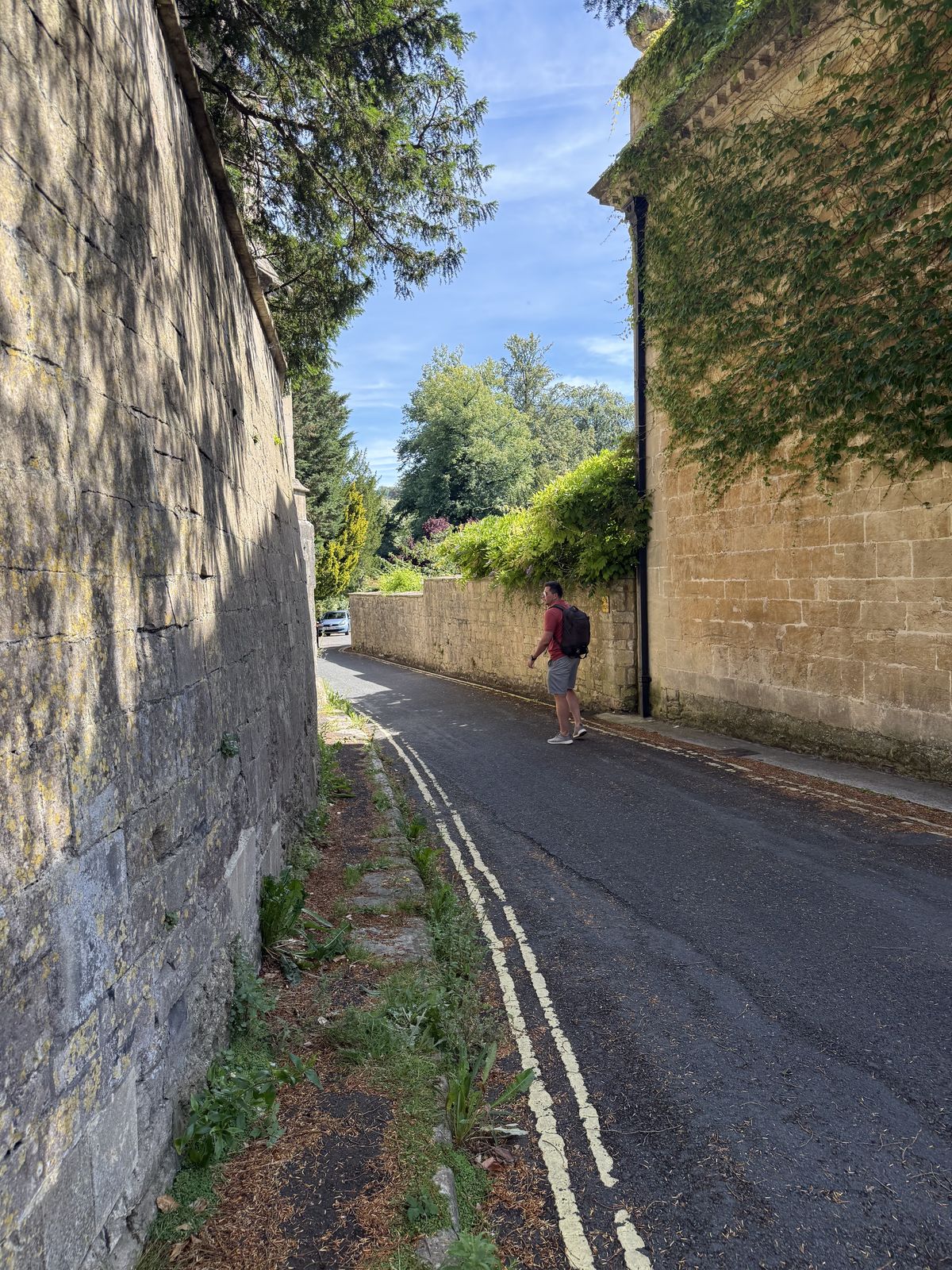
Cross Pulteney Bridge, walk the grand straight run of Great Pulteney Street, and you are in Bathwick, the calmer eastern side of the river. The tour crowds mostly stay west, around the Baths and the Abbey, so here you get wide Georgian streets almost to yourself. Holburne Museum sits at the end of Great Pulteney Street in a handsome old building, and the whole area rewards an aimless wander. Come back towards the river and you can look down on Pulteney Weir, the curved horseshoe cascade below the bridge, from the quieter bank. Keep drifting south past the canal and you land in Widcombe, a pocket of manor house, church and cottage gardens that barely feels like part of a tourist city at all.
Bath rewards curiosity beyond the big-ticket sites. There are small, specific museums tucked around the city covering everything from fashion to local history and eccentric collections, the kind of places that take an hour and stick with you. I will not list opening hours here because they shift, so check each one's site, but if it is raining they are a gift. A wet day in Bath is genuinely easy to fill: the Roman Baths, the Abbey, and a couple of small museums and you barely notice the weather.
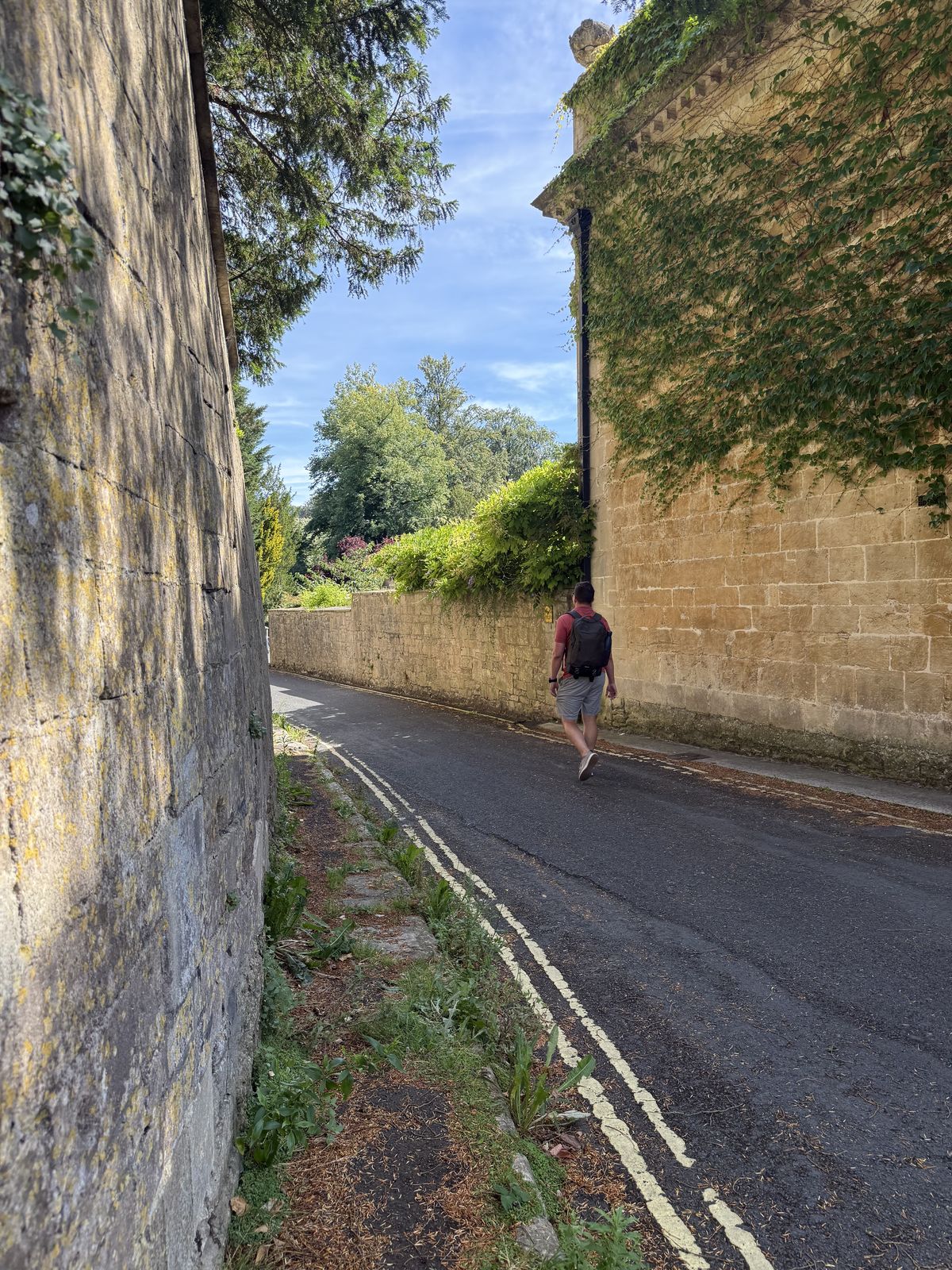
While you are hunting corners, keep an eye out for the hidden lanes themselves. Away from the main shopping streets there are narrow flagstone passages, gas lamps and pocket-sized courtyards where the honey stone closes over your head. They do not have names most visitors know, and stumbling on them is half the fun. And if the hunt earns a bun, Sally Lunn's trades out of a house dated to about 1482, one of the oldest in the city. I go into the architecture properly in my walking Georgian Bath post if the stone is what draws you.
The odd details are half of what makes this side of Bath so good.
| The detail | Why it is odd |
|---|---|
| Sally Lunn's house | Dated to about 1482, one of the oldest houses in Bath |
| Bath Abbey's heating | Since the Footprint project finished in 2021, spa water warms the church through the floor |
| Abbey tower tours | 212 steps to the top, past the bells |
| Pulteney Bridge | Built 1769-1774 for about £11,000 |
| Thermae's bathing water | Heated to about 69C underground, surfacing at around 45C with 42-plus minerals |
Can you fit hidden Bath into a day trip from London?
Yes, with a little discipline. Do the famous core in the morning while crowds are thin, climb to one quiet spot in the afternoon, Alexandra Park or Prior Park, and stay for a ghost walk if your train allows. The fastest direct service from Paddington takes 1 hour 19 minutes.
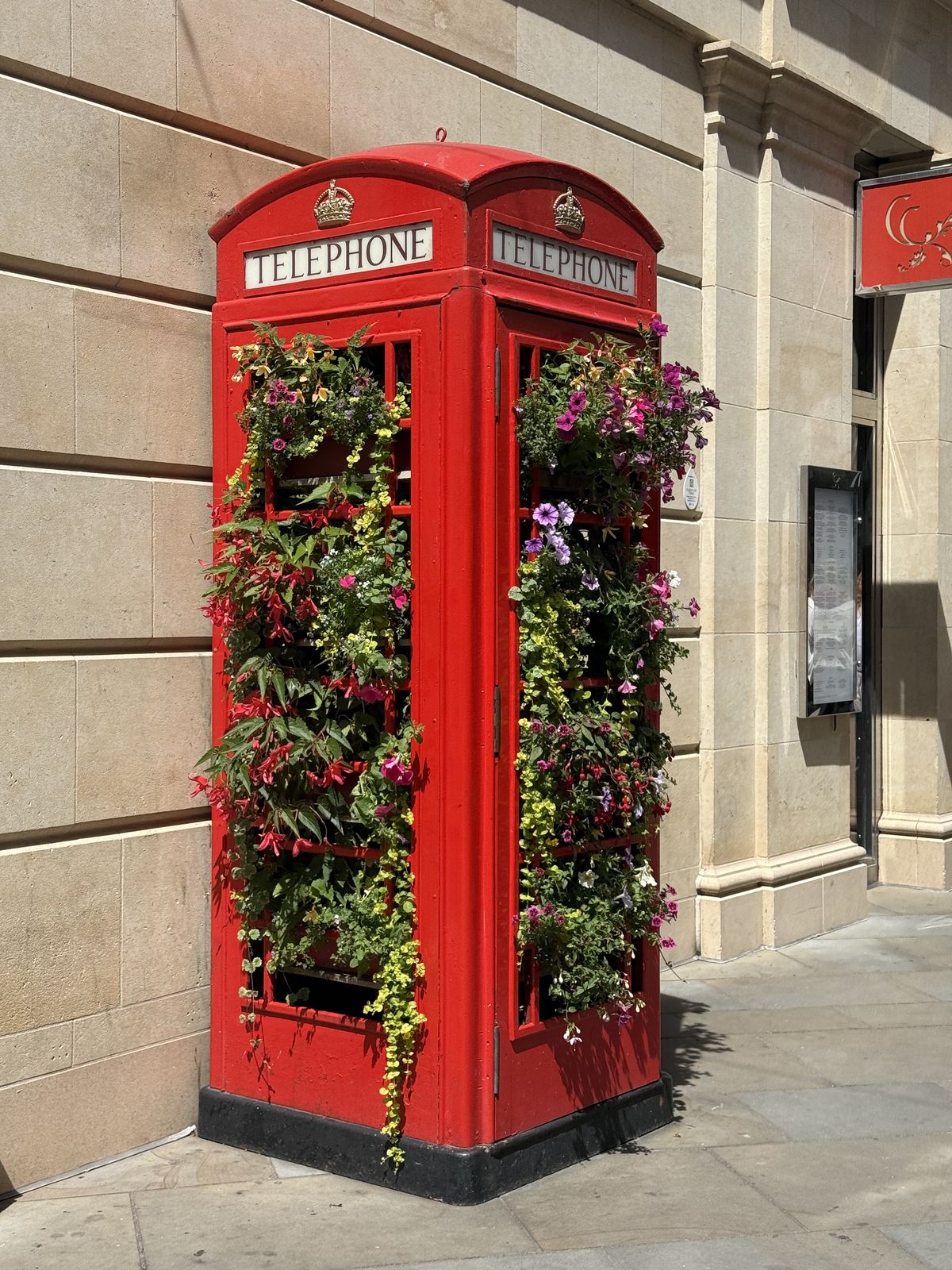
Here is the honest tension. A single day is enough for either the headline sights or the hidden ones, not comfortably both at a relaxed pace. My advice is to do the famous core in the morning, when you have energy and the crowds are thinner, then climb out to one quiet thing in the afternoon: Alexandra Park for the view, or Prior Park if it is open and the weather is kind. That balance gave me the best day.
If your visit runs into the evening, Bath does atmospheric better than almost anywhere. The honey stone goes amber under the lamps, the crowds thin out, and the lanes I love in daylight turn genuinely eerie. A guided ghost walk leans into that: Roman, medieval and Georgian tales, told by a costumed guide who takes you through Bath Abbey's churchyard, Queen Square and the darker corners most day-trippers never see after hours. The Bath guided ghost tour meets right outside the Abbey and runs for about two hours; check the listing’s start time against your return train. It is the one thing on this list I would actively plan around rather than stumble into.
| Getting there and around | The practical bit |
|---|---|
| Fastest direct train | London Paddington to Bath Spa in 1 hour 19 minutes |
| Trains on an average weekday | Around 72 between Paddington and Bath |
| Station to the centre | A short, flat walk |
| Prior Park | No visitor parking; arrive on foot or by bus |
| Ghost walk meeting point | Outside Bath Abbey, after dark |
Getting here is the easy part, and even the hillier corners are reachable on foot from the station. If you would rather have the travel and the main route handled and simply use your free time to wander the quiet lanes, a guided day tour to Bath from London is the low-effort way to do it. For planning the shape of the day around both the famous and the hidden, my one day in Bath guide lays out the timing.
Bath gives up its best self to people willing to walk uphill and turn down the streets nobody is photographing. Do the Roman Baths, of course. Then go looking for the version of the city that most day-trippers never see.
Plan your next step
Bath ghost walk
Have a travel date in mind? Follow a theatrical evening trail through Bath’s haunted streets and take part in ghostly experiments. Check your date before arranging the rest of your day.
About 1¾ hours; start outside Bath Abbey, finish at Queen Square. English guided walk; allow time to reach your return train.
Start with this option, or compare the choices below.
Choose a date to see the published schedule.
Compare the options for your Bath plans
| Experience | Why choose it | Allow | What to account for |
|---|---|---|---|
| Bath ghost walk | Follow a theatrical evening trail through Bath’s haunted streets and take part in ghostly experiments. | 1.75 hours | About 1¾ hours; start outside Bath Abbey, finish at Queen Square. English guided walk; allow time to reach your return train. |
| Bath hop-on hop-off bus | Use the City and Skyline routes to connect Bath’s centre with its hillside stops. | 0.833333 hours | 24- or 48-hour ticket options; each complete circuit takes about 50 minutes. English commentary. Board at a route stop; attraction entry is extra. |